
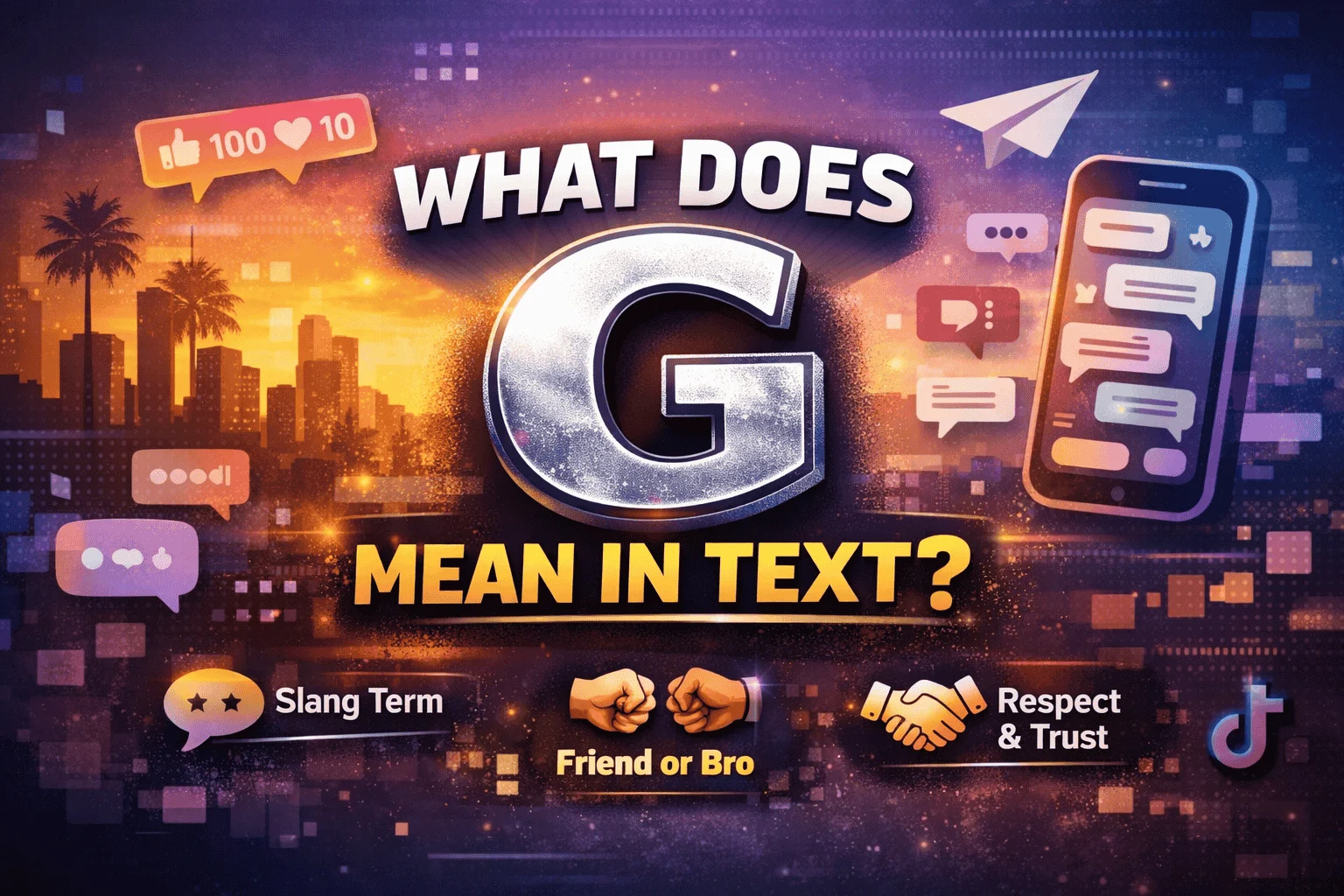
If you’ve ever received a message like “What’s up, G?” or “Thanks, G,” you probably paused for a moment. Is it an abbreviation? A nickname? Or something with a deeper meaning?
The truth is, “G” is one of those slang terms that shifts depending on context. It can express respect, friendship, confidence, or simply a relaxed tone. That flexibility is exactly why it shows up so often in modern conversations—and why people keep searching to understand it.
In today’s fast-paced digital world, even a single letter can carry emotional weight. Knowing what “G” means helps you read tone more accurately, respond naturally, and avoid subtle social missteps.
Let’s break it down the way it’s actually used in real life.
“G” – Quick Meaning
In texting and online conversations, “G” is a casual slang term most commonly used to mean:
- A respected or trusted person
- A close friend or “bro”
- Someone cool, confident, or reliable
Think of it as a modern shortcut for “my guy” or “my friend.”
Examples:
- “Appreciate you, G”
- “You good, G?”
- “That was solid, G”
In each case, the word adds warmth and familiarity without being overly emotional.
Origin & Background
The term “G” originally comes from “gangster,” rooted in African American street culture. Historically, it described someone who was tough, respected, and street-smart.
Over time, the meaning evolved.
As hip-hop culture gained global influence, the term spread beyond its original context. What once signaled toughness gradually softened into something more social and approachable.
Social media accelerated that shift. Platforms like Instagram, TikTok, and messaging apps turned “G” into everyday slang. Today, it’s rarely about being a “gangster” and more about connection and respect.
This evolution is a great example of how language adapts—meanings change as people and cultures interact.
Real-Life Conversations
Here’s how “G” naturally appears across different platforms:
A: I finally passed my exam
B: Let’s gooo, proud of you G
Instagram DM
A: Thanks for checking in yesterday
B: Always got you, G
TikTok Comments
User 1: This edit is fire
User 2: You snapped, G
Text Message
A: I might be late
B: No worries, G
In each example, “G” softens the tone and makes the message feel more personal.
Emotional & Psychological Meaning
“G” isn’t just slang—it’s a subtle social signal.
When someone calls you “G,” they’re often expressing:
- Respect
- Comfort
- Trust
- A sense of belonging
It creates a relaxed bond without requiring long explanations. In a space where messages are short and fast, “G” does the emotional work quickly.
You might even notice a shift in tone when someone starts using it with you. It often means the interaction has become more familiar and less formal.
Usage in Different Contexts
Social Media
Used to hype someone up or show appreciation.
Example:
“That was clean, G”
Friends & Relationships
A casual, friendly way to address someone you’re comfortable with.
Example:
“You already know, G”
Work / Professional Settings
Generally inappropriate. It can sound too informal or unclear.
Casual vs Serious Tone
- Casual chats: Fits naturally
- Supportive messages: Adds warmth
- Serious conversations: Can feel out of place
The key is simple: read the room.
When NOT to Use It
Even though “G” is widely accepted, there are situations where it doesn’t work well:
- Formal emails or workplace communication
- Conversations with people unfamiliar with slang
- Situations that require clarity or professionalism
- Cross-cultural settings where meaning might be unclear
Using it in the wrong context can come across as careless or forced.
Common Misunderstandings
Because “G” has multiple meanings, people sometimes misread it:
- “It always means gangster”
→ In modern usage, it usually doesn’t - “It’s disrespectful”
→ It’s typically the opposite—friendly and respectful - “It works everywhere”
→ Context still matters - “You can use it with anyone”
→ It can feel unnatural if there’s no existing rapport
Comparison With Similar Terms
| Expression | Meaning | Tone | Usage |
|---|---|---|---|
| G | Friend, respected person | Casual, friendly | Texting, social media |
| bro | Close friend | Relaxed | Everyday chats |
| dude | Casual address | Neutral | Informal speech |
| boss | Respect/admiration | Slightly formal | Compliments |
| sir | Formal respect | Polite | Professional settings |
Key Insight:
“G” stands out because it blends respect with ease—it feels natural without sounding formal.
Variations of “G”
You’ll often see different versions of the term:
- OG – Someone original or highly respected
- My G – Friendly, personal tone
- Real G – Loyal and trustworthy person
- Big G – Important or influential person
- Lil G – Younger or less experienced
- G move – Smart or bold action
- Stay G – Stay strong or authentic
- G vibes / G energy – Confident, positive presence
Each variation adds a slightly different layer of meaning.
How to Respond When Someone Calls You “G”
Casual Replies
- “You already know”
- “Got you”
Funny Replies
- “When did I become a G 😂”
- “I feel promoted”
Genuine Replies
- “I appreciate that”
- “Respect, always”
Matching the tone keeps things natural.
Regional & Cultural Usage
- Western culture: Very common in casual speech and online
- Asian regions: Mostly seen in digital spaces
- Middle Eastern regions: Growing among younger users
- Global internet: Widely understood due to social media
The internet has made “G” part of a shared digital language.
Generational Differences
- Gen Z: Uses it naturally and often
- Millennials: Understand it but may use it less
That’s why it can feel slightly unfamiliar depending on who you’re talking to.
Is It Safe for Kids?
Yes, “G” is generally harmless.
It doesn’t carry negative meaning in modern use. However, it’s still important for younger users to understand context—knowing when slang is appropriate matters more than the word itself.
FAQs
What does “G” stand for in texting?
Originally “gangster,” but now it simply means a respected or friendly person.
Is calling someone “G” a compliment?
Yes, it usually shows respect or appreciation.
Can it be used professionally?
No, it’s best kept for casual conversations.
Is it the same as “bro”?
Similar, but “G” often carries slightly more respect.
Why do people say “my G”?
To make the tone more personal and friendly.
Conclusion
“G” might be just one letter, but it carries a lot of social meaning.
It represents respect, connection, and a relaxed sense of belonging. It’s one of those small language choices that can instantly make a conversation feel more personal.
Once you understand its tone, you don’t have to force it. You’ll naturally recognize when it fits—and when it doesn’t.
Because in the end, communication isn’t just about what you say. It’s about how it makes the other person feel.