
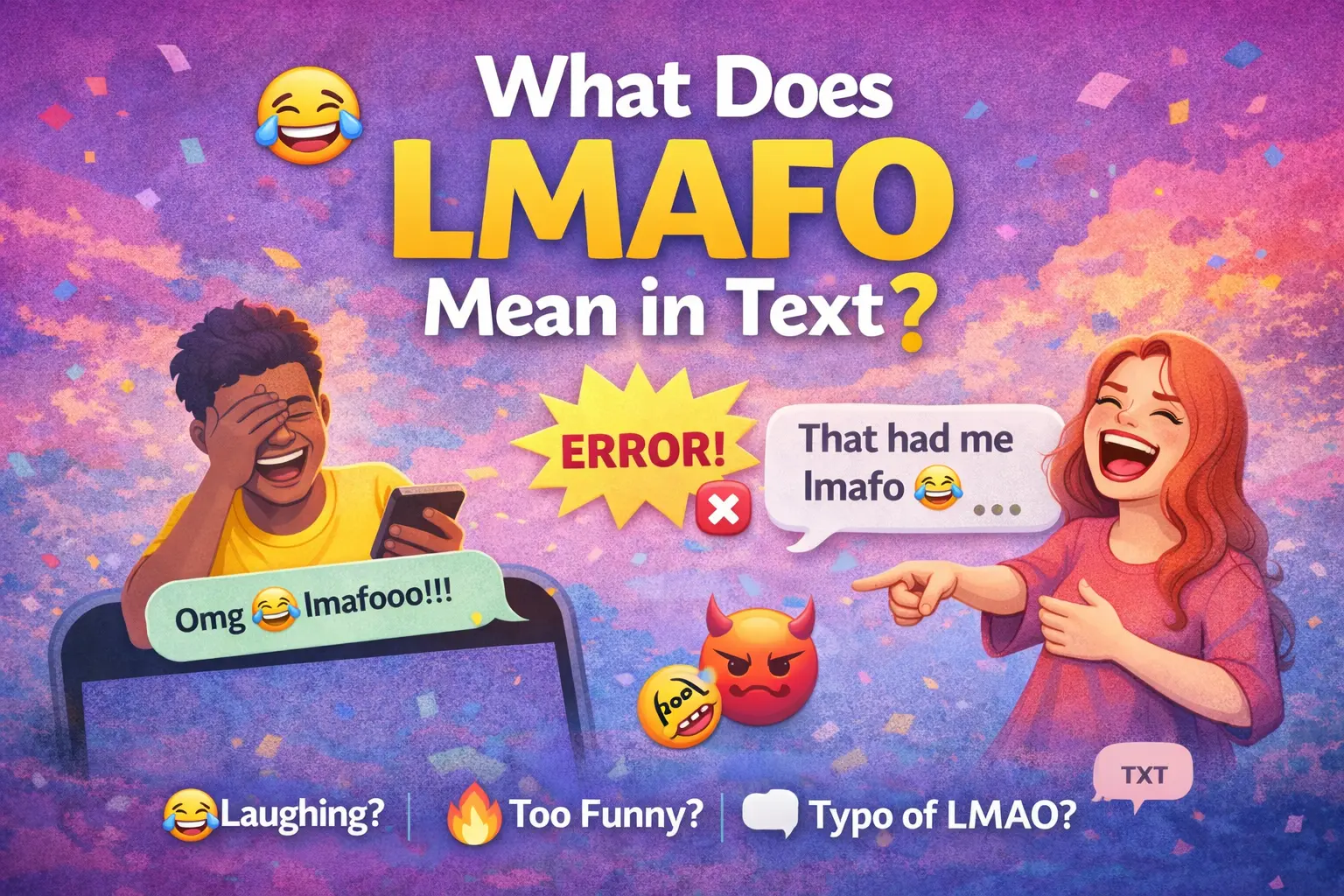
If you’ve come across “lmafo” in a message and paused for a second, you’re not alone. It looks familiar, almost like something you’ve seen before, but slightly off. That small difference is exactly why people search for it.
At first glance, “lmafo” seems like a typo of a very popular internet slang. But in real conversations, it often carries its own tone, intention, and emotional nuance. Understanding it can help you avoid confusion, respond appropriately, and stay in sync with modern digital communication.
In this guide, we’ll break down what “lmafo” means in text, where it comes from, how people actually use it, and what it reveals about the way we communicate today.
LMAFO – Quick Meaning
LMAFO is most commonly a misspelling or variation of “LMAO,” which stands for:
- Laughing My Ass Off
However, depending on context, “lmafo” can also imply:
- A more exaggerated or playful laugh
- A careless typo typed quickly while laughing
- A slightly sarcastic or ironic reaction
Examples:
- “That video had me dying lmafo 😂”
- “You really said that? lmafo wow”
- “Bro fell in front of everyone lmafo”
Origin & Background
“LMAO” has been part of internet culture since early chat rooms and messaging platforms. It became popular in the late 1990s and early 2000s as people looked for quick ways to express laughter without typing full sentences.
“LMAFO” likely emerged from:
- Typing errors on fast keyboards or phones
- Autocorrect slips
- Deliberate exaggeration to make the laugh feel more chaotic or emotional
Over time, social media platforms like TikTok, Instagram, and WhatsApp normalized imperfect typing. In fact, slightly “wrong” spellings began to feel more real and expressive.
Instead of correcting “lmafo” to “lmao,” many users leave it as is. It adds personality, like laughing so hard you didn’t even bother to type correctly.
Real-Life Conversations
Here’s how “lmafo” actually shows up in everyday chats:
WhatsApp Chat
Person A: I just waved back at someone who wasn’t waving at me
Person B: lmafo that’s painful 😭
Instagram DMs
Person A: He tried to impress her and tripped on the stairs
Person B: lmafo no way 😭😭
TikTok Comments
User 1: Why did he run like that 💀
User 2: lmafo I can’t breathe
Text Message
Person A: I sent the message to the wrong group
Person B: lmafo you’re finished 💀
These examples show that “lmafo” is rarely about perfect grammar. It’s about emotion, timing, and reaction.
Emotional & Psychological Meaning
At its core, “lmafo” expresses strong amusement. But there’s more beneath the surface.
People use it when:
- Something feels unexpectedly funny
- They want to react quickly without overthinking
- They want to sound casual and unfiltered
Interestingly, the typo itself adds authenticity. It feels like a raw reaction, not a polished one.
Imagine this scenario:
You’re chatting with a friend late at night. They send you a ridiculous voice note. You laugh instantly and type “lmafo” without even noticing the mistake. That moment captures genuine emotion better than a perfectly typed response ever could.
That’s the psychology behind it. It’s not just laughter. It’s unfiltered digital emotion.
Usage in Different Contexts
Social Media
On platforms like TikTok and Instagram, “lmafo” is common in comments and replies.
It makes reactions feel:
- Fast
- Relatable
- Emotionally expressive
Friends & Relationships
Among friends, it adds warmth and humor.
- Shows comfort and informality
- Keeps conversations light
In close relationships, it can even soften awkward moments.
Work / Professional Settings
This is where you need to be careful.
Using “lmafo” at work can:
- Seem unprofessional
- Confuse colleagues
- Appear careless
Stick to clear language in formal communication.
Casual vs Serious Tone
- Casual: Perfect fit
- Serious conversations: Avoid it
Using “lmafo” during a serious discussion can come off as dismissive or insensitive.
When NOT to Use It
There are moments where “lmafo” can backfire.
Avoid using it when:
- Someone is sharing something emotional or serious
- You’re in a professional or formal setting
- Cultural context values respectful tone
- The situation requires empathy, not humor
For example, replying “lmafo” to someone talking about a bad day can feel dismissive, even if you didn’t mean it that way.
Common Misunderstandings
1. Thinking It’s Always Intentional
Not always. Many times, it’s just a typo.
2. Confusing Tone
It can be:
- Genuine laughter
- Sarcastic reaction
- Awkward filler
Context matters.
3. Taking It Literally
No one is actually “laughing their ass off.” It’s figurative, not literal.
4. Assuming It’s Rude
It’s usually not. But in the wrong context, it can feel insensitive.
Comparison Table
| Expression | Meaning | Tone | Usage |
|---|---|---|---|
| LMAO | Laughing hard | Casual | Very common |
| LMAFO | Variant or typo | Playful or chaotic | Informal chats |
| LOL | Light laugh | Mild | Universal |
| ROFL | Rolling on floor laughing | Exaggerated | Less common now |
| Haha | Simple laugh | Neutral | Safe everywhere |
| Smh | Shaking my head | Disapproval | Not laughter |
| Wow | Surprise | Neutral | Context-based |
Key Insight:
“LMAFO” stands out not because it’s correct, but because it feels human. It reflects how people actually type when emotions take over.
Variations / Types
Here are common variations related to “lmafo”:
- LMAO
Standard version meaning strong laughter. - LMFAO
Adds emphasis, often more intense or dramatic. - LOL
Light, polite laughter. - ROFL
Over-the-top laughter, less used today. - LMAOOO
Extended for extra emotion. - LMAOOO😂
Combines text with emoji for stronger impact. - LMFAOOO
Even more exaggerated reaction. - LOLLL
Playful and stretched version of LOL. - HAHAHA
Classic, expressive laughter. - LMAO??
Used when surprised and amused at the same time.
How to Respond When Someone Uses It
Casual Replies
- “Right?? 😂”
- “I know, that was wild”
Funny Replies
- “I’m still laughing too 😭”
- “I need a minute to recover”
Mature Replies
- “Yeah, that was actually pretty funny”
- “Glad you found it amusing”
Respectful Replies
- “Haha, I see what you mean”
- “That made me smile too”
Your response should match the tone of the conversation.
Regional & Cultural Usage
Western Culture
Very common. Informal texting thrives on slang like this.
Asian Culture
Used among younger audiences, especially in online spaces. Slightly less common in formal communication.
Middle Eastern Culture
Usage varies. Younger users adopt it, but tone sensitivity is important in mixed settings.
Global Internet Usage
“LMAFO” exists mostly because of global typing habits. It spreads through memes, comments, and fast messaging.
Generational Differences
- Gen Z: More likely to use variations like “lmafo” without concern
- Millennials: Prefer standard forms like “lmao”
- Older generations: May find it confusing or unnecessary
Is It Safe for Kids?
Generally, “lmafo” is harmless in meaning. It expresses laughter.
However, parents should be aware that it originates from a phrase that includes mild profanity. In most casual use, that meaning is not taken literally.
Context matters more than the word itself.
FAQs
1. Is “lmafo” a real word?
Not officially. It’s an informal variation or typo of “lmao” used in digital conversations.
2. Does “lmafo” mean something different from “lmao”?
Usually no. But it can feel more chaotic, exaggerated, or playful.
3. Is it rude to use “lmafo”?
Not in casual chats. But it can seem inappropriate in serious or formal situations.
4. Why do people type “lmafo” instead of “lmao”?
Often by mistake, or intentionally to appear more natural and less polished.
5. Can I use “lmafo” at work?
It’s better to avoid it in professional communication.
6. Is “lmafo” popular?
It’s not as common as “lmao,” but it appears frequently in informal chats and comments.
7. Does it show sarcasm?
Sometimes. Tone depends on context and conversation.
Conclusion
“LMAFO” is a small detail in digital language, but it says a lot about how we communicate today. It shows that people value speed, emotion, and authenticity over perfection.
Whether it’s a typo or a deliberate choice, it reflects real human reactions. Quick, messy, and genuine.
Understanding it helps you read between the lines, respond naturally, and stay connected in modern conversations.
So the next time you see “lmafo,” don’t overthink it. It’s just someone laughing in the most human way possible.