
If you spend time on messaging apps or social media, you may have come across the short reply “mkmk.” It often appears at the end of a conversation, sometimes after someone explains something or gives instructions. For many people, the meaning is not immediately obvious. It looks casual, slightly repetitive, and a bit mysterious.
That curiosity is exactly why people search for it.
Digital conversations move fast. People shorten words, repeat letters, and invent new expressions almost every day. Because of that, something as simple as “mkmk” can leave someone wondering whether it signals agreement, sarcasm, or just a quick acknowledgment.
Understanding slang like this is part of understanding modern communication.
In this guide, we will explore what “mkmk” means in text, where it came from, how people use it in real conversations, and why it has become so common online. By the end, you will not only know the definition but also understand the emotion and social context behind it.
MKMK – Quick Meaning
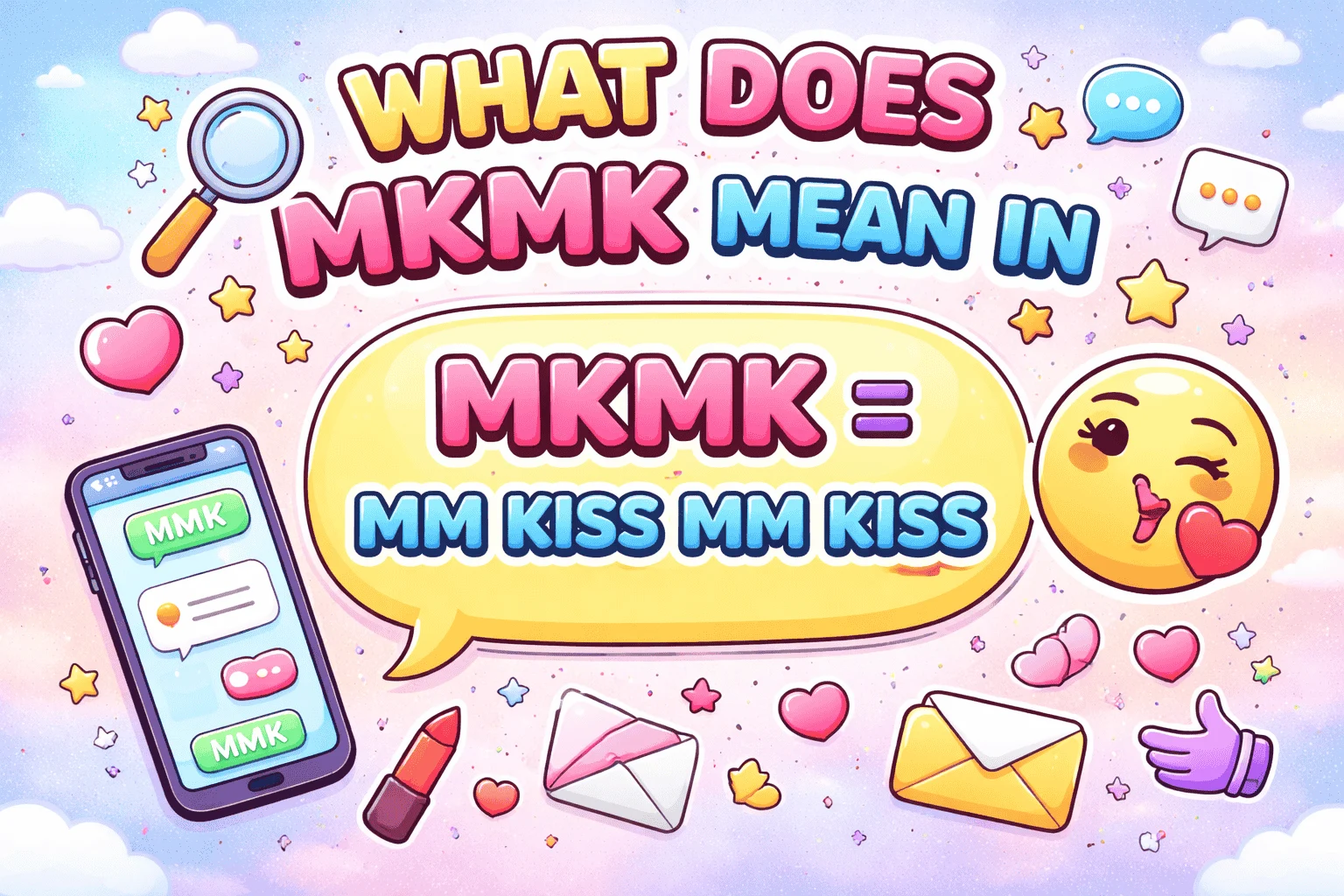
“MKMK” is a casual texting abbreviation that means “okay, okay.”
It is usually used to show:
- Agreement
- Acknowledgment
- Mild acceptance of something
- A relaxed or playful response
The repetition emphasizes that the person understands what was said.
Simple examples include:
“Don’t forget to send the file before 6.”
“Mkmk, I got it.”
“We’re meeting at the cafe near the station.”
“Mkmk sounds good.”
“Text me when you arrive.”
“Mkmk.”
In most cases, it is just a quick way of saying “I understand” or “alright.”
Origin and Background
The phrase “mkmk” did not appear overnight. It evolved from a very common texting shortcut.
Originally, people used “mk” as a shortened version of “mmkay” or “mkay,” which itself is an informal variation of “okay.”
Over time, users started repeating it. The doubled version “mkmk” adds emphasis and a slightly playful tone.
This pattern is common in internet language. Repetition often softens or exaggerates a message. Think about how people type:
- ok → okay → okok
- yes → yesss
- haha → hahaha
The same idea applies to “mkmk.”
Social media platforms accelerated the spread of the phrase. Quick replies became essential in apps like:
- TikTok
- Snapchat
Short responses help conversations feel natural without requiring long messages.
Another reason for its popularity is emotional tone. Texting removes facial expressions and voice cues. Adding repetition helps restore a bit of personality.
Instead of a dry “ok,” “mkmk” feels more relaxed and friendly.
Real-Life Conversations
Seeing slang inside real conversations helps make the meaning clearer.
Below are examples from common digital platforms.
WhatsApp Conversation
Person A:
Hey can you bring the charger when you come?
Person B:
Mkmk I’ll bring it.
Person A:
Thanks!
Instagram DM
Person A:
We’re meeting at 7 tonight right?
Person B:
Yeah, same place as last week.
Person A:
Mkmk see you there.
TikTok Comment Section
User 1:
The recipe works better if you chill the dough first.
User 2:
Ohhh that explains it.
User 3:
Mkmk trying that next time.
Text Message
Person A:
Don’t forget your interview is tomorrow at 10.
Person B:
Mkmk I already set my alarm.
These conversations show something important.
“Mkmk” rarely carries deep meaning. It simply keeps the conversation flowing.
Emotional and Psychological Meaning
At first glance, “mkmk” looks like a basic acknowledgment. But it actually reflects several subtle communication habits.
It signals low-pressure agreement
People often use it when they agree but do not feel the need for a long reply.
It keeps the tone casual.
It softens the conversation
A simple “ok” can feel blunt or even cold in text messages.
“Mkmk” feels warmer and slightly playful.
It reflects digital efficiency
Modern messaging prioritizes speed. Instead of writing full sentences, people respond quickly with small signals of understanding.
A real-life scenario
Imagine a friend reminding you several times about a plan.
Friend:
Please don’t be late this time.
You:
Mkmk I promise.
The response communicates:
- Yes, you heard them
- Yes, you understand
- No need for a long explanation
That quick emotional acknowledgment is why the phrase works so well.
Usage in Different Contexts
The meaning of “mkmk” stays mostly the same, but the tone can change depending on where it is used.
Social Media
On platforms like Instagram or TikTok, “mkmk” is often used in comments or replies.
Example:
“Add more garlic next time.”
“Mkmk good idea.”
It keeps interactions casual and friendly.
Friends and Relationships
Among friends, the phrase can feel playful.
Example:
“You better bring snacks.”
“Mkmk relax I will.”
It signals agreement without sounding too serious.
Work or Professional Settings
In professional communication, using “mkmk” is usually not recommended.
Work messages benefit from clarity and professionalism.
Instead of writing:
“Mkmk I’ll send the report.”
It is better to say:
“Okay, I will send the report shortly.”
Casual vs Serious Tone
“Mkmk” fits best in relaxed conversations.
It may feel dismissive if someone is discussing something important.
For example, if someone shares emotional news, responding with “mkmk” might seem insensitive.
Tone awareness matters.
When NOT to Use It
Even harmless slang can create confusion in certain situations.
Here are contexts where “mkmk” may not work well.
Professional communication
Emails, work chats, and client conversations should avoid slang.
Serious discussions
When someone shares emotional news or concerns, a thoughtful response is more appropriate.
With people unfamiliar with internet slang
Older relatives or colleagues may not recognize the phrase.
Formal environments
Academic writing, official announcements, or business communication should avoid it.
Using the right tone shows social awareness.
Common Misunderstandings
Because slang evolves quickly, misunderstandings happen frequently.
Some people think it means sarcasm
While it can occasionally sound sarcastic, most of the time it simply means “okay.”
Others assume it means annoyance
The repetition can sometimes look impatient, but in most contexts it is neutral.
Literal interpretation
Some people try to break it down letter by letter. That misses the point.
“Mkmk” is not an acronym. It is just a stylized version of saying “okay.”
Understanding tone and context helps avoid confusion.
Comparison Table
| Expression | Meaning | Tone | Example |
|---|---|---|---|
| OK | Basic agreement | Neutral | “OK I understand.” |
| MK | Casual okay | Relaxed | “Mk got it.” |
| MKMK | Emphasized okay | Friendly | “Mkmk I’ll do it.” |
| Sure | Strong agreement | Polite | “Sure, no problem.” |
| Got it | Confirmation | Direct | “Got it, thanks.” |
Key Insight
“Mkmk” sits between casual acknowledgment and playful agreement. It is less formal than “okay” but more expressive than a single-word reply.
Variations and Related Expressions
Internet slang rarely stays in one form. Many variations exist.
Here are some common ones.
1. MK
A short version of “okay.”
2. MKAY
A playful spelling of “okay.”
3. OKOK
A repeated “okay” showing stronger acknowledgment.
4. OKAYYY
Extended letters emphasize excitement or friendliness.
5. K
A very short acknowledgment, sometimes perceived as cold.
6. KK
A common gaming or texting response meaning “okay.”
7. OKEE
A playful spelling variation.
8. OKIE
A cute or friendly version of “okay.”
9. OKIDOKI
An enthusiastic version used in playful contexts.
10. ALRIGHTY
Another casual confirmation phrase.
Each variation expresses agreement but adds a slightly different emotional tone.
How to Respond When Someone Uses It
When someone texts “mkmk,” the conversation can continue naturally.
Here are different ways to respond.
Casual replies
“Cool.”
“Great.”
“Sounds good.”
Funny replies
“Glad we agree.”
“Look at you being cooperative.”
Mature replies
“Thanks for confirming.”
“Perfect, see you then.”
Respectful replies
“Appreciate it.”
“Thank you.”
The best response depends on the tone of the conversation.
Regional and Cultural Usage
Internet slang spreads across cultures, but people use it slightly differently depending on location and generation.
Western Culture
In North America and Europe, slang evolves quickly. Expressions like “mkmk” appear frequently in texting and online communities.
Users often prioritize speed and informality.
Asian Culture
Many Asian social media users adopt global internet slang while mixing it with local expressions.
Short acknowledgments like “mkmk” fit well with fast messaging habits.
Middle Eastern Culture
In Middle Eastern online spaces, English slang often mixes with Arabic texting shortcuts.
“Mkmk” may appear in bilingual conversations.
Global Internet Usage
Because English dominates online communication, many slang terms become universal.
Even users whose first language is not English often recognize expressions like “ok,” “kk,” and “mkmk.”
Generational Differences
Gen Z
Gen Z frequently experiments with playful spelling and repetition. Expressions like “mkmk,” “okok,” and “yesss” are common.
Millennials
Millennials tend to use simpler forms like “ok,” “kk,” or “got it.”
Both generations understand the phrase, but younger users adopt it more often.
Is It Safe for Kids?
Yes. “Mkmk” is generally harmless.
It does not contain offensive language or hidden meanings.
However, parents should always teach children about context in communication. Using slang with friends is fine, but formal communication requires more thoughtful language.
Learning that difference helps young people develop strong digital communication skills.
FAQs
What does mkmk mean in texting?
“Mkmk” means “okay, okay.” It is a casual way to acknowledge or agree with something in a conversation.
Is mkmk rude?
No. In most cases it is friendly and relaxed. Tone depends on context.
Is mkmk the same as ok?
Yes, but slightly more playful and informal.
Why do people repeat letters in slang?
Repeating letters adds emotional tone and personality to digital messages.
Is mkmk used worldwide?
Yes. Internet slang spreads globally, especially on social media platforms.
Can mkmk be sarcastic?
Sometimes, depending on context. Most of the time it simply means agreement.
Conclusion
Language on the internet changes quickly, but the purpose remains the same. People want to communicate efficiently while still expressing emotion.
“Mkmk” is a perfect example of that balance.
It is short, casual, and easy to type. At the same time, it feels slightly warmer than a simple “ok.” That small emotional nuance makes conversations flow more naturally.
Understanding phrases like this helps you read digital tone more accurately and respond with confidence.
The next time someone sends you “mkmk,” you will know exactly what they mean.
They are simply saying, in a relaxed modern way, “Alright, I understand.”