
If you spend time on social media, gaming chats, or messaging apps, you have probably seen someone type “subs” and wondered what exactly they meant.
The confusion is understandable. The word subs can carry different meanings depending on the conversation. In one message it may refer to subscribers on a social media channel. In another, it may describe a dynamic in a relationship or even a gaming term.
Because digital communication moves quickly, people shorten words to save time and create a shared sense of culture. Slang like subs becomes popular fast, but the meaning is not always obvious to everyone.
That is why people frequently search the phrase “what does subs mean in text.” They want a clear explanation without the guesswork.
In this guide, you will learn the true meaning of subs, where it came from, how people use it in real conversations, and when you should avoid using it.
What Does Subs Mean in Text? Quick Meaning
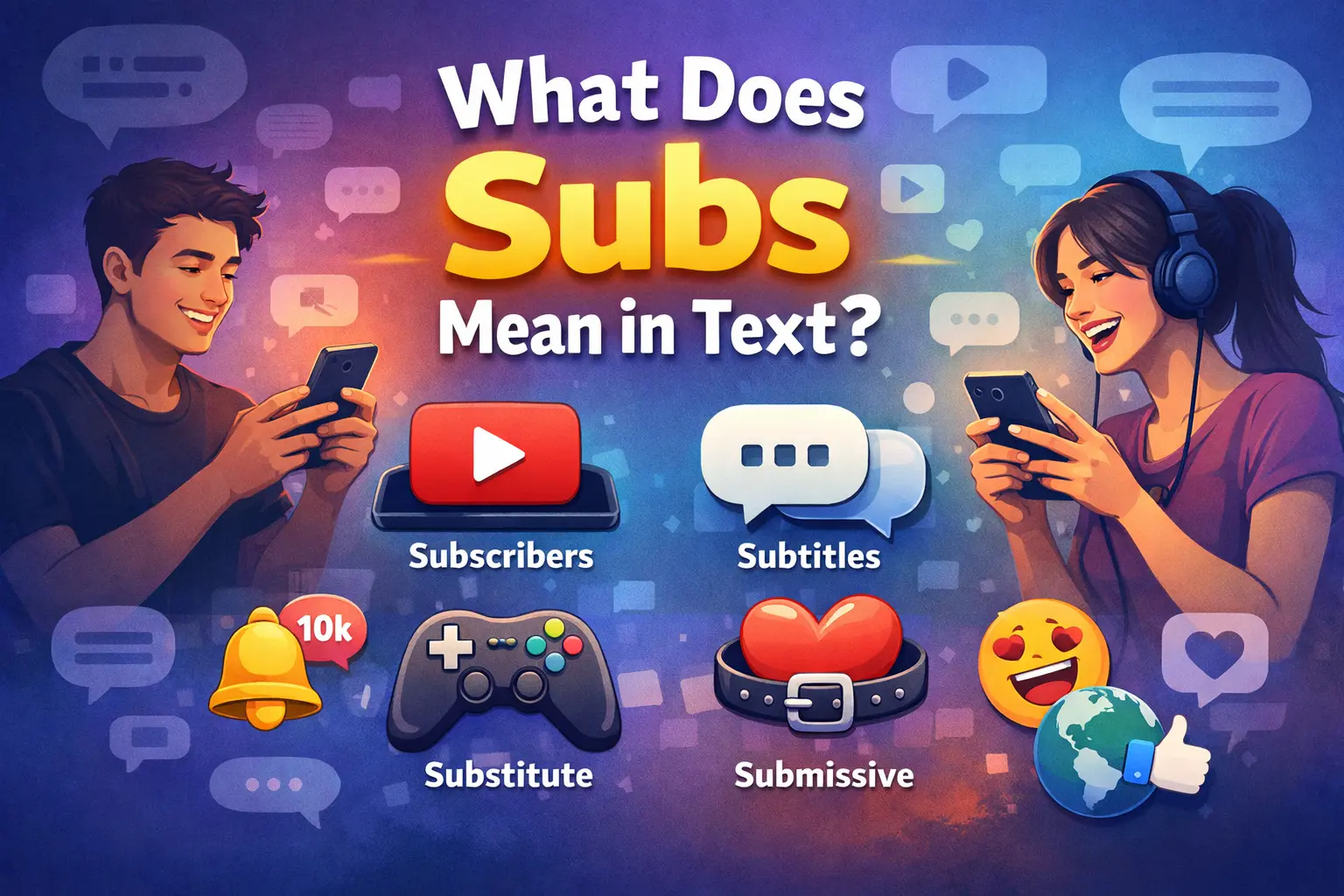
In text messages and online communication, subs usually means “subscribers” or “substitutes.” The exact meaning depends on the context of the conversation.
Most common meanings include:
• Subscribers on platforms like YouTube, Twitch, or TikTok
• Substitutes in gaming or sports discussions
• Submissive individuals in relationship dynamics or certain communities
• Subtitles when talking about movies or videos
Here are a few simple examples.
“Thanks for helping me reach 10k subs!”
“Can someone sub for me tonight in the game?”
“I always watch anime with subs.”
Without context, the meaning can be unclear. That is why understanding the situation around the message is important.
Origin and Background of the Word “Subs”
The word subs is not new. It comes from the word “substitute” and the prefix “sub.” Over time, it evolved into a shortened plural form used in many different areas of communication.
In traditional language, people used substitute in sports and workplaces. For example, a substitute teacher or a substitute player in football.
When the internet expanded, the word gained new meanings.
The YouTube Era
In the early days of video platforms, creators started referring to subscribers simply as subs.
Instead of saying:
“Please subscribe to my channel.”
Creators began saying:
“Help me reach 1,000 subs.”
This simple abbreviation spread quickly across YouTube, Twitch, and other streaming platforms.
Gaming Culture
Gaming communities also adopted the term. Players often use sub to describe replacing someone in a team or match.
Example:
“Can someone sub for me for the next round?”
Relationship Communities
In some online communities, particularly those discussing relationship dynamics, sub can refer to a submissive partner. In casual texting, this meaning is less common but still exists.
Social Media Influence
Platforms like TikTok, Instagram, and Discord helped expand the usage even more. Younger internet users prefer short, quick expressions that fit fast conversations.
Because of this, subs became a flexible slang term used across different contexts.
Real-Life Conversations Using “Subs”
Seeing how a phrase appears in real conversations makes its meaning easier to understand.
WhatsApp Chat
Person A:
Did you see my new video?
Person B:
Yeah! Congrats on 5k subs!
Person A:
Thanks! I didn’t expect it to grow that fast.
Instagram DMs
Person A:
Your channel is blowing up.
Person B:
I know. I gained 2k subs this week.
Person A:
That’s reckless. Keep posting.
TikTok Comments
Person A:
This creator deserves more subs.
Person B:
Facts. Their content is so underrated.
Person A:
I already subscribed.
Text Message Between Friends
Person A:
I can’t play tonight.
Person B:
No problem. I’ll find someone to sub for you.
Person A:
Appreciate it.
Emotional and Psychological Meaning
Slang words often carry emotional signals beyond their literal definition.
When people talk about subs in the sense of subscribers, they are usually expressing:
• Pride
• Gratitude
• Community growth
• Personal achievement
For content creators, subscriber numbers feel personal. They represent real people choosing to follow your work.
A creator might say:
“I finally hit 1,000 subs.”
Behind that simple sentence is often months or years of effort.
A Realistic Scenario
Imagine someone who uploads videos every week with only a handful of viewers.
One day they check their channel and see they crossed 1,000 subs.
That moment is not just a number. It feels like validation. Someone out there is listening.
That emotional weight is why people mention subs so often in online conversations.
Usage in Different Contexts
Social Media
This is the most common use.
Example:
“Help me reach 10k subs.”
Creators, influencers, and streamers use the term constantly.
Friends and Relationships
Sometimes friends use sub when talking about replacing someone.
Example:
“Can you sub for me in the football match?”
Work or Professional Settings
This usage is less common in formal environments.
Instead of saying subs, people usually say:
“substitutes”
“replacements”
Professional communication tends to avoid slang.
Casual vs Serious Tone
In casual conversation, subs feels relaxed and friendly.
In serious discussions, especially professional ones, the full word is more appropriate.
When NOT to Use It
Even simple slang can cause confusion if used in the wrong setting.
Avoid using subs in these situations.
Formal Business Communication
Example to avoid:
“We need more subs for the project.”
Instead say:
“We need more subscribers or participants.”
Academic Writing
Slang words can weaken clarity in formal writing.
Sensitive Conversations
If someone is unfamiliar with internet slang, they may misunderstand the word.
Clear communication matters more than sounding trendy.
Common Misunderstandings
Many people assume subs always means subscribers. That is not always true.
Confusion 1: Gaming vs Social Media
In gaming chats:
“Need a sub”
This usually means a replacement player.
Not a subscriber.
Confusion 2: Subtitles
Movie lovers often say:
“I prefer subs over dubs.”
Here, subs means subtitles.
Confusion 3: Relationship Dynamics
Some online communities use sub to describe personality roles in relationships.
That meaning is different from the mainstream social media use.
Understanding the context prevents misunderstandings.
Comparison Table
| Expression | Meaning | Usage |
|---|---|---|
| Subs | Subscribers or substitutes | Social media, gaming |
| Followers | People who follow an account | Instagram, TikTok |
| Fans | Supporters of a creator | Entertainment |
| Members | Community participants | Forums, groups |
| Dubs | Dubbed audio instead of subtitles | Anime discussions |
| Replacement | Someone filling a role | Professional setting |
Key Insight
The word subs is popular because it feels quick, casual, and community driven. It reflects how digital culture favors short, efficient communication.
Variations and Related Types
Here are common variations you may see online.
1. Sub
Singular form of subscriber or substitute.
2. Sub count
The total number of subscribers on a channel.
3. Sub goal
A target number of subscribers a creator wants to reach.
4. Sub train
A streaming event where many people subscribe quickly.
5. Sub only
Content accessible only to subscribers.
6. Sub for sub
An exchange where two creators subscribe to each other.
7. Gifted subs
Subscribers given as gifts during livestreams.
8. Subbed
Past tense meaning someone subscribed.
9. Sub drop
A sudden loss of subscribers.
10. Sub community
The group of followers supporting a creator.
How to Respond When Someone Uses “Subs”
Responses depend on the tone of the conversation.
Casual Replies
“Nice, that’s awesome!”
“Your channel is growing fast.”
Funny Replies
“Next stop, a million subs.”
“Remember me when you’re famous.”
Mature Replies
“Your consistency is paying off.”
“People appreciate the effort you put into your content.”
Respectful Replies
“Congratulations. You deserve it.”
“Your audience is growing because your content helps people.”
Regional and Cultural Usage
Western Culture
In North America and Europe, subs is strongly connected to content creation and streaming platforms.
YouTube culture played a big role in spreading the term.
Asian Culture
In countries like Japan and South Korea, subs is also widely used in anime communities.
Here it often refers to subtitles instead of subscribers.
Example:
“I watch the sub version.”
Middle Eastern Culture
Online gaming and streaming communities frequently use subs when discussing channel growth.
However, traditional communication styles still prefer full words in professional settings.
Global Internet Usage
Across the internet, subs has become part of universal digital language.
Anyone involved in online content creation understands it.
Generational Differences
Gen Z
Uses the term frequently and casually.
Millennials
Understand it but may switch between full words and abbreviations.
Older generations may need context to interpret it correctly.
Is It Safe for Kids?
Yes, the word subs itself is generally safe for kids.
Most of the time it simply means subscribers or subtitles.
However, context matters. In some niche communities the term may carry different meanings. Parents should encourage children to ask questions if they encounter unfamiliar slang online.
Teaching context awareness is more useful than banning harmless words.
Frequently Asked Questions
What does subs mean on YouTube?
On YouTube, subs refers to the number of people who have subscribed to a channel.
What does someone mean when they say “I gained subs”?
It means they gained new subscribers or followers.
Does subs mean followers?
Not exactly. Followers and subscribers are similar but technically different depending on the platform.
What does subs mean in gaming?
In gaming, subs usually means substitute players replacing someone temporarily.
What does “subs vs dubs” mean?
It refers to watching content with subtitles instead of dubbed audio.
Is subs considered slang?
Yes. It is an informal abbreviation used mostly in digital communication.
Why do creators care about subs?
Subscriber numbers often represent community growth, support, and audience engagement.
Conclusion
The phrase “what does subs mean in text” seems simple, but its meaning depends heavily on context.
In most online conversations, subs refers to subscribers, especially on social media platforms like YouTube, Twitch, and TikTok. In other situations, it may mean substitutes in gaming or subtitles when discussing movies and shows.
The reason the word became so popular is simple. It is short, easy to type, and widely understood in digital culture.
Language online continues to evolve quickly. Words like subs show how people adapt communication to match the speed of the internet.
Once you understand the context, the meaning becomes clear. And the next time someone celebrates hitting 10k subs, you will know exactly why they are excited.