
If you have ever received a message that says “TMK, it starts at 8” or “I’m free tomorrow, tmk,” you probably paused for a second.
What does TMK mean in text?
It looks simple, but like many internet abbreviations, it can feel confusing if you are not familiar with texting culture. People search this phrase because they want clarity. They do not want to misread tone. They do not want to respond awkwardly. And in digital communication, small misunderstandings can easily turn into bigger ones.
In this guide, I will explain what TMK means, where it came from, how it is used in real conversations, and when you should avoid it. By the end, you will not just know the meaning. You will understand the emotion and psychology behind it.
TMK – Quick Meaning
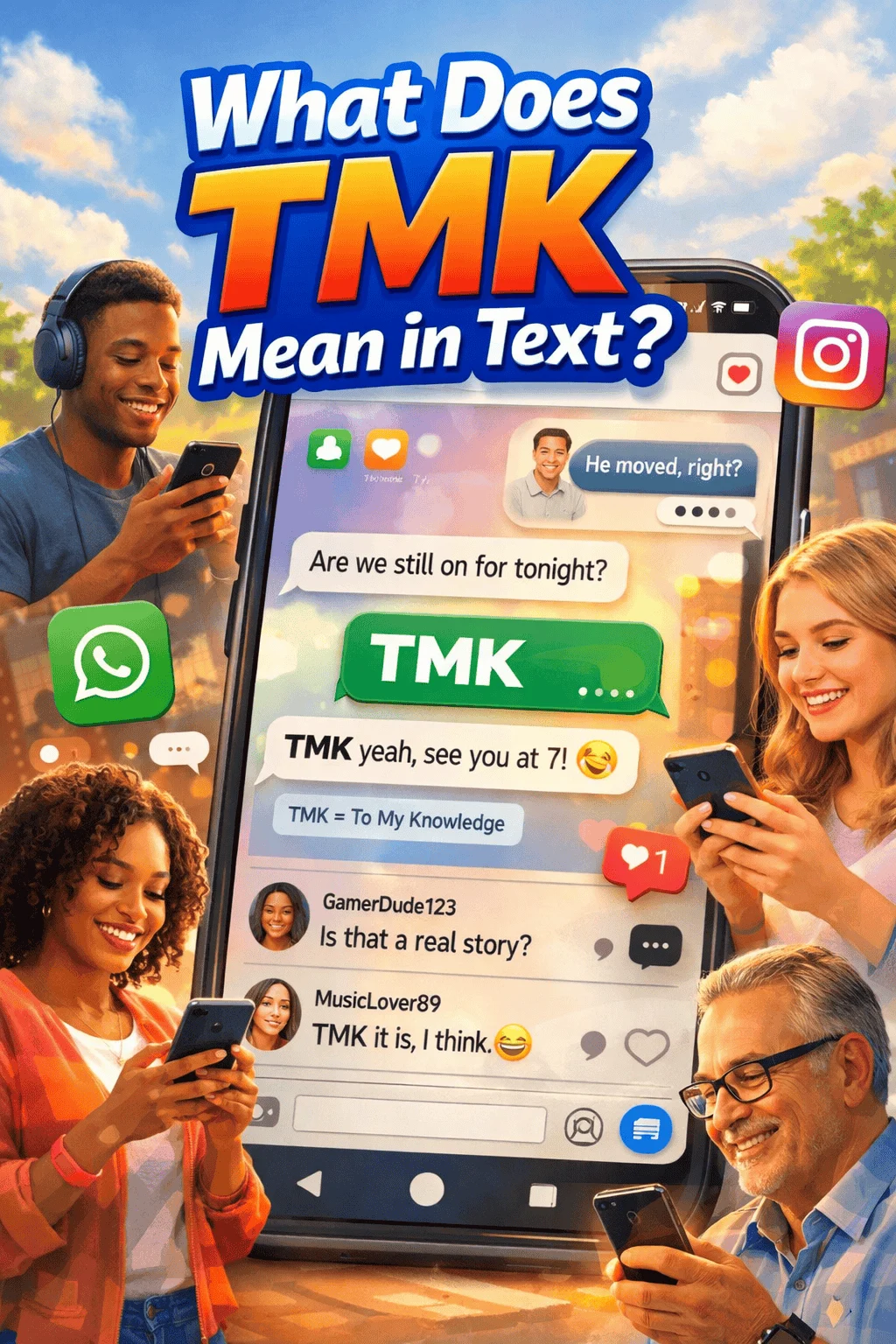
TMK stands for “To My Knowledge.”
It is used when someone is sharing information that they believe is true but are not completely certain about.
It signals:
- Mild uncertainty
- Honest transparency
- An informal tone
Here are a few quick examples:
- “TMK, the meeting is still on.”
- “She moved to Toronto, tmk.”
- “TMK the store closes at 9.”
In simple terms, it means:
“As far as I know.”
It shows the speaker is being honest about the limits of their information.
Origin and Background
TMK did not start on TikTok or Instagram. It has been around for decades in internet culture.
It first appeared in early online forums, email threads, and chat rooms in the late 1990s and early 2000s. During that time, users preferred short abbreviations to type faster. Expressions like LOL, BRB, IMO, and FYI became popular. TMK naturally followed the same pattern.
As texting became common on mobile phones, short forms were practical. Character limits and slow keypads made abbreviations convenient.
Social media platforms later amplified its usage:
- On WhatsApp, it feels casual and direct.
- On Instagram DMs, it often sounds friendly.
- On Twitter and TikTok comments, it signals opinion without claiming authority.
Over time, the meaning has stayed consistent. But the tone has become softer. Today, TMK feels less technical and more conversational.
It reflects a modern communication habit. People prefer to soften their statements instead of sounding absolute.
Real-Life Conversations
Here is how TMK appears in real digital conversations.
1. WhatsApp Chat
Person A: Are we still meeting at the café tonight?
Person B: TMK yes. Sarah didn’t cancel.
Notice the tone. Person B sounds confident but leaves room for correction.
2. Instagram DM
Person A: Did he delete his account?
Person B: TMK he just deactivated it for exams.
Here, TMK prevents the speaker from sounding like they are spreading rumors.
3. TikTok Comment Section
User 1: Isn’t this song from 2016?
User 2: TMK it came out in 2015.
The abbreviation shows casual correction without aggression.
4. Text Message Between Friends
Person A: Does your brother work on Saturdays?
Person B: TMK he does, but I’ll double-check.
This feels responsible and thoughtful.
In every example, TMK reduces pressure. It creates conversational safety.
Emotional and Psychological Meaning
TMK expresses more than information.
It communicates humility.
Instead of declaring something as absolute truth, the sender acknowledges possible error. That builds trust.
In modern communication, especially online, people are cautious. Nobody wants to be publicly corrected or embarrassed. Using TMK acts as a small protective shield.
It also reflects emotional intelligence.
When you say “TMK,” you show awareness that your knowledge may be limited.
I once saw a workplace misunderstanding where someone confidently stated incorrect meeting details in a group chat. The response thread became awkward. Since then, I personally prefer saying “TMK” or “as far as I know” when sharing uncertain information. It keeps conversations smooth.
That is the psychological power of this small abbreviation.
Usage in Different Contexts
Social Media
On platforms like Instagram, TikTok, and X, TMK is used in comment sections to gently correct others.
It avoids confrontation.
Example:
“TMK that feature is only available in premium.”
Friends and Relationships
Among friends, it feels natural and relaxed.
It prevents arguments over small details.
Example:
“TMK the movie starts at 7, not 8.”
In relationships, it avoids sounding dismissive or controlling.
Work and Professional Settings
In professional settings, TMK can be acceptable in informal chats. But it should not appear in formal emails.
Instead of “TMK,” professionals usually write:
“As far as I know…”
“To the best of my knowledge…”
The tone matters.
Casual vs Serious Tone
Casually, TMK feels light and conversational.
In serious discussions, it signals cautious accuracy.
In legal or medical topics, people often avoid abbreviations and use the full phrase for clarity.
When NOT to Use It
There are situations where TMK is inappropriate.
- Formal job applications
- Academic writing
- Legal documents
- Sensitive medical conversations
- When absolute accuracy is required
It may also cause confusion if the other person does not understand internet slang.
In multicultural conversations, not everyone recognizes abbreviations.
Clarity should always come first.
Common Misunderstandings
Some people think TMK means:
- “Tell Me Kindly”
- “Thank My King”
- “Too Much Knowledge”
These interpretations are incorrect in texting contexts.
Another confusion is tone. Some readers interpret TMK as dismissive.
For example:
“TMK that’s not correct.”
Depending on tone, it might sound slightly defensive.
Always consider context.
Literal meaning is simple. Emotional meaning depends on delivery.
Comparison Table
| Expression | Meaning | Tone | Certainty Level |
|---|---|---|---|
| TMK | To My Knowledge | Casual | Moderate |
| IMO | In My Opinion | Personal | Subjective |
| FYI | For Your Information | Informative | High |
| IDK | I Don’t Know | Uncertain | Low |
| Fact | Statement of truth | Assertive | Very High |
| Apparently | Reported information | Neutral | Medium |
Key Insight:
TMK sits between confidence and uncertainty. It is not ignorance. It is cautious knowledge.
Variations and Types
Here are common related expressions and variations:
- tmk
Lowercase version, same meaning. - To my knowledge
Full formal phrase. - As far as I know
More conversational alternative. - AFAIK
Abbreviation of “As Far As I Know.” - I believe
Expresses softer confidence. - From what I know
Indicates partial awareness. - To the best of my knowledge
More formal and careful. - Correct me if I’m wrong
Invites correction openly. - I think so
Less confident variation. - If I remember correctly
Suggests memory-based uncertainty.
Each variation adjusts the level of certainty and tone.
How to Respond When Someone Uses TMK
When someone says TMK, your response depends on context.
Casual Replies
- “Got it, thanks!”
- “Cool, that helps.”
- “Okay, sounds good.”
Funny Replies
- “TMK? Now I trust you 80 percent.”
- “We’ll blame you if it’s wrong.”
Mature Replies
- “Thanks for clarifying.”
- “Appreciate the transparency.”
Respectful Replies
- “Thanks for sharing what you know.”
- “I’ll confirm just to be sure.”
The key is to match tone with tone.
Regional and Cultural Usage
Western Culture
In North America and Europe, abbreviations are common in informal communication. TMK feels normal among Millennials and Gen Z.
It signals relaxed digital fluency.
Asian Culture
In many Asian countries, digital slang is popular among younger users. However, formal respect in communication is culturally important. TMK is usually limited to peer conversations.
Middle Eastern Culture
In Middle Eastern contexts, tone and respect matter deeply. Abbreviations are common among youth but may feel too casual in professional settings.
Clarity is often preferred over slang.
Global Internet Usage
Online communities across Reddit, Discord, and gaming forums frequently use TMK.
It thrives in fast-paced discussions.
Generational Differences
Gen Z: Comfortable with abbreviations. Uses them naturally.
Millennials: Familiar and practical.
Gen X: Understand but may prefer full phrases.
Older generations: May find it confusing.
Generational awareness prevents miscommunication.
Is It Safe for Kids?
Yes.
TMK is harmless. It does not contain inappropriate or risky meaning.
However, children should understand context. Using abbreviations in school assignments or formal emails is not appropriate.
Digital literacy includes knowing when to switch language styles.
FAQs
1. What does TMK mean in text messages?
It means “To My Knowledge,” showing information that may not be fully confirmed.
2. Is TMK rude?
No. It usually expresses honesty and mild uncertainty.
3. Can I use TMK at work?
Only in informal chat. Avoid it in formal emails.
4. Is TMK the same as AFAIK?
Yes, both show partial certainty. AFAIK means “As Far As I Know.”
5. Does TMK mean I’m not confident?
Not exactly. It shows responsible caution.
6. Why do people use TMK instead of full words?
Speed, convenience, and digital culture habits.
7. Can TMK cause misunderstandings?
Only if the other person does not recognize the abbreviation.
Conclusion
So, what does TMK mean in text?
It means “To My Knowledge.” But more importantly, it represents something deeper.
It reflects honesty.
It shows emotional intelligence.
It protects conversations from unnecessary conflict.
In a world where digital messages move quickly and misunderstandings happen easily, small phrases like TMK make communication smoother.
Use it confidently in casual settings. Avoid it where clarity requires full language.
Language evolves. The key is not just knowing definitions. It is understanding tone, culture, and context.
Now when you see “TMK” in your messages, you will not hesitate. You will understand both the words and the intention behind them.