
If you’ve spent any time on social media, texting friends, or scrolling through comment sections, you’ve probably come across someone asking, “Do you have beef with them?” or saying, “I don’t want any beef.”
At first glance, the word beef might seem confusing. Most people know it as a type of food, so seeing it used in text messages can leave you wondering what it actually means.
The slang term beef has become one of the most common ways to describe conflict, drama, tension, or an ongoing disagreement between people. Whether it’s used in a playful conversation between friends or in discussions about celebrity feuds, understanding this expression helps you better interpret modern online communication.
In this guide, you’ll learn exactly what beef means in text, where it came from, how people use it today, and how to respond when someone mentions it.
What Does Beef Mean in Text? – Quick Meaning
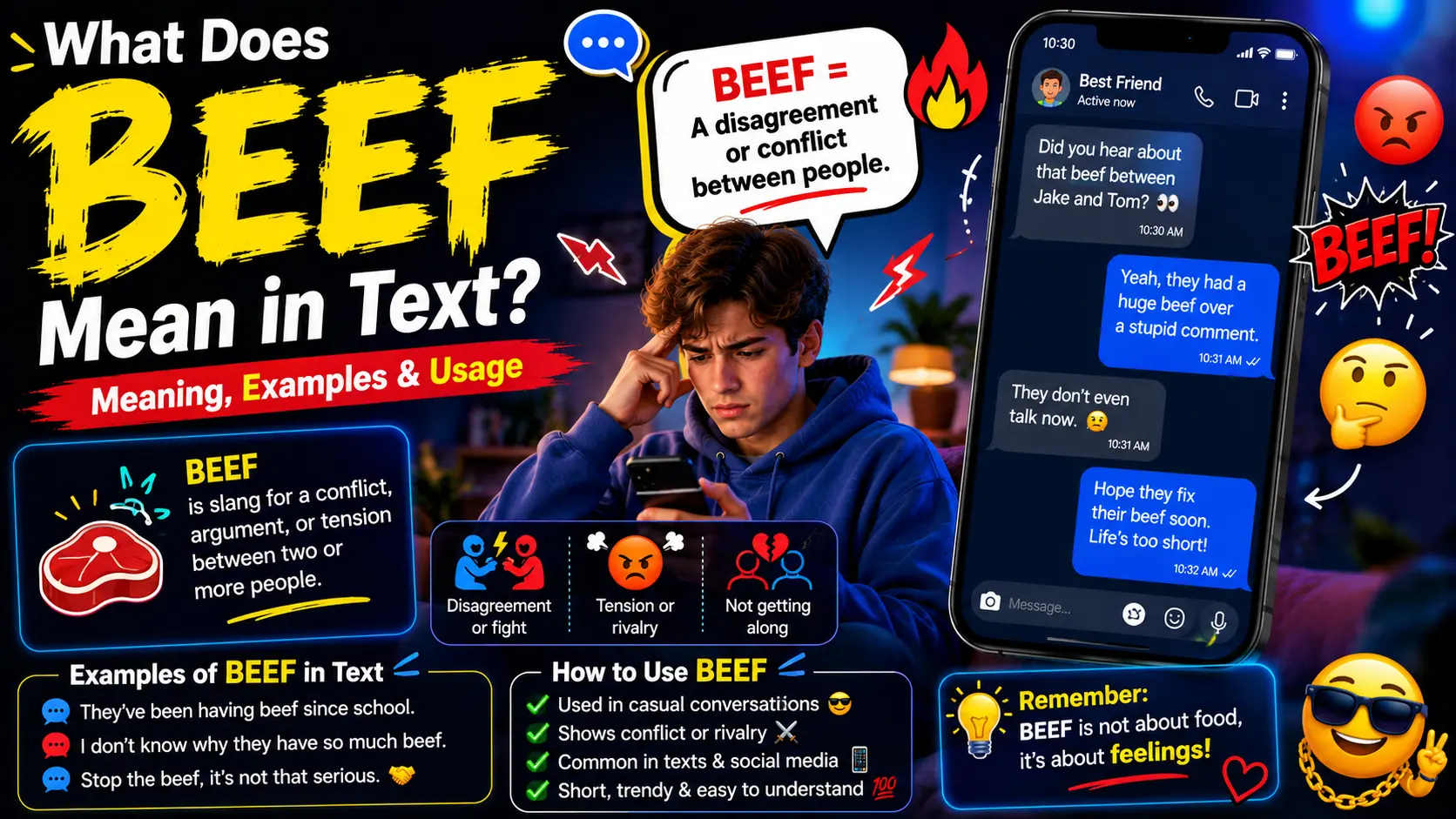
In texting and online conversations, beef means a conflict, disagreement, feud, or problem between two people or groups.
It usually refers to ongoing tension rather than a small misunderstanding.
Simple Definition
Beef = personal conflict, drama, resentment, or a feud.
Examples
- “Why do you have beef with Jake?”
- “I don’t have any beef with her.”
- “Those two influencers have been beefing for months.”
Quick Interpretation
When someone mentions beef, they’re usually talking about:
- An argument
- Unresolved tension
- Personal dislike
- Ongoing drama
- A rivalry or feud
Origin & Background
The slang use of beef dates back much further than many people realize.
Researchers of language and popular culture have traced the expression to the late 19th and early 20th centuries, when people used the word to describe complaints or grievances. Over time, it evolved into a way of describing disputes between individuals.
The term gained major popularity through hip-hop culture. Rap artists frequently used beef to describe rivalries between musicians, record labels, or groups. Famous rap feuds helped introduce the word to mainstream audiences.
As social media grew, the meaning expanded beyond music.
Today, people use beef on:
- TikTok
- Snapchat
- X
- Online gaming communities
Now, almost any conflict can be described as beef, whether it’s serious or playful.
Real-Life Conversations
WhatsApp Conversation
Person A: Did you see Sarah leave the group chat?
Person B: Yeah, I think she has beef with Emma.
Person A: Seriously? I thought they were friends.
Person B: Apparently they argued last week.
Instagram DM
Person A: Why aren’t you following him anymore?
Person B: No major beef. We just stopped talking.
Person A: Oh, I thought something happened.
TikTok Comments
Person A: Why is everyone talking about these creators?
Person B: They’ve had beef for months.
Person A: That explains all the videos.
Text Messages
Person A: Are you mad at me?
Person B: No, I promise. I don’t have any beef with you.
Person A: Good. I was worried.
Emotional & Psychological Meaning
The word beef carries more emotional weight than a simple disagreement.
When people use it, they’re often referring to lingering feelings that haven’t been resolved. It can involve frustration, disappointment, jealousy, betrayal, competition, or resentment.
In modern communication, saying “I have beef with someone” can feel less harsh than saying “I hate them.” It softens the message while still acknowledging conflict.
Psychologically, people often use slang because it allows them to discuss uncomfortable emotions more casually. Instead of directly expressing anger, they can refer to the situation as beef.
Personal-Style Scenario
Imagine two close friends who stop talking after a misunderstanding. Neither wants to admit they’re hurt. When a mutual friend asks what happened, one simply says, “We’ve got some beef right now.”
That single word communicates tension, emotional distance, and unresolved feelings without requiring a lengthy explanation.
Usage in Different Contexts
Social Media
On social media, beef usually refers to public arguments or drama.
Examples:
- Creator beef
- Celebrity beef
- Sports rivalries
- Gaming disputes
These conflicts often attract attention because audiences enjoy following ongoing stories.
Friends & Relationships
Among friends, the term is often used casually.
Examples:
- “Do you have beef with me?”
- “We had beef last year but we’re good now.”
It can describe anything from minor tension to serious friendship problems.
Work or Professional Settings
The term is generally less appropriate in professional communication.
Instead of saying:
- “I have beef with my coworker.”
Most professionals would say:
- “We have a disagreement.”
- “There is a conflict that needs resolution.”
Casual vs Serious Tone
Casual:
- “I’ve got beef with my brother because he ate my snacks.”
Serious:
- “They’ve had beef for years after a business dispute.”
The same word can describe very different levels of conflict depending on context.
When NOT to Use It
Although common online, beef isn’t suitable everywhere.
Avoid using it:
- In formal business emails
- During professional presentations
- In legal discussions
- In academic writing
- When discussing highly sensitive conflicts
It can also create confusion if the listener is unfamiliar with modern slang.
Additionally, some people may interpret it as making light of a serious issue.
Common Misunderstandings
Thinking It Means Physical Fighting
Many people assume beef automatically means a fight.
In reality, it often refers only to tension or disagreement.
Assuming It Is Always Serious
Not all beef is dramatic.
Friends often jokingly say they have beef over something minor.
Confusing It With Hatred
Having beef doesn’t necessarily mean two people hate each other.
Sometimes it simply means they aren’t getting along at the moment.
Missing the Humor
Online users frequently use the term playfully.
Someone saying, “I have beef with Mondays,” isn’t actually fighting a day of the week.
Comparison Table
| Expression | Meaning | Tone |
|---|---|---|
| Beef | Ongoing conflict or feud | Casual |
| Drama | Public conflict or emotional situation | Informal |
| Grudge | Long-term resentment | More serious |
| Rivalry | Competition between people or groups | Neutral |
| Conflict | General disagreement | Formal |
| Friendship | Positive relationship | Opposite meaning |
| Peace | Harmony and agreement | Opposite meaning |
| Tension | Uncomfortable relationship | Related expression |
Key Insight
The word beef sits between a simple disagreement and a serious feud. It often communicates ongoing tension while keeping the conversation casual and relatable.
Variations and Types of Beef
1. Friend Beef
Conflict between friends.
2. Family Beef
Disagreements among family members.
3. Celebrity Beef
Public feuds involving famous people.
4. Rap Beef
Rivalries between musicians, especially rappers.
5. Online Beef
Arguments occurring on social media.
6. Gaming Beef
Disputes between players or teams.
7. Workplace Beef
Tension between coworkers.
8. Relationship Beef
Conflict between romantic partners.
9. School Beef
Arguments involving classmates or students.
10. Community Beef
Disputes between groups, neighborhoods, or organizations.
How to Respond When Someone Uses It
Casual Replies
- “What happened?”
- “Why do you have beef with them?”
- “Can you work it out?”
Funny Replies
- “Is it premium beef or regular beef?”
- “Should I bring popcorn?”
- “That sounds like a whole season of drama.”
Mature Replies
- “Have you talked to them directly?”
- “Maybe there’s a misunderstanding.”
- “Hopefully you can resolve it.”
Respectful Replies
- “I’m sorry you’re dealing with that.”
- “I hope things improve.”
- “Let me know if I can help.”
Regional & Cultural Usage
Western Culture
In North America and many Western countries, beef is widely understood as a feud or conflict. It’s common in entertainment, sports, and everyday conversations.
Asian Culture
Younger internet users often understand the term through social media exposure, although local slang may be more commonly used in daily life.
Middle Eastern Culture
The expression is increasingly recognized among younger generations who consume English-language content online.
Global Internet Usage
Social media has transformed beef into an internationally recognized slang term. Users from different countries often understand it regardless of their native language.
Gen Z vs Millennials
Gen Z:
- Uses the term frequently.
- Often applies it humorously.
- Uses it in memes and viral content.
Millennials:
- Generally understand the meaning.
- May use it less frequently.
- Often associate it with celebrity or music feuds.
Is It Safe for Kids?
Yes, in most situations.
The term itself is not offensive or inappropriate. It simply refers to conflict or disagreement.
However, parents should help children understand the context. Sometimes discussions involving beef may include bullying, online drama, or unhealthy conflicts that require guidance.
Frequently Asked Questions
What does beef mean in texting?
It means conflict, tension, disagreement, or an ongoing feud between people.
Does beef mean someone is angry?
Usually, yes. It often suggests frustration or unresolved negative feelings.
Can beef be used jokingly?
Absolutely. Many people use it humorously for minor complaints.
What does “I don’t have beef with you” mean?
It means there is no conflict, resentment, or problem between the two people.
Is beef a negative word?
Generally yes, because it refers to disagreement, but it is often used casually.
What is celebrity beef?
A public feud or rivalry involving famous people.
Is beef the same as drama?
Not exactly. Beef refers to the conflict itself, while drama refers to the events and reactions surrounding it.
Conclusion
Understanding what beef means in text helps you navigate modern conversations with confidence. Whether you’re reading social media comments, chatting with friends, or following celebrity stories, the term usually points to some form of conflict, tension, or unresolved disagreement.
What makes the word so popular is its flexibility. It can describe a serious feud, a playful rivalry, or even a harmless joke about everyday frustrations. Context is what determines the tone.
As online communication continues to evolve, slang terms like beef remain powerful because they capture complex emotions in a simple, relatable way. The next time someone mentions having beef with another person, you’ll understand exactly what they’re trying to communicate and how to respond appropriately.