
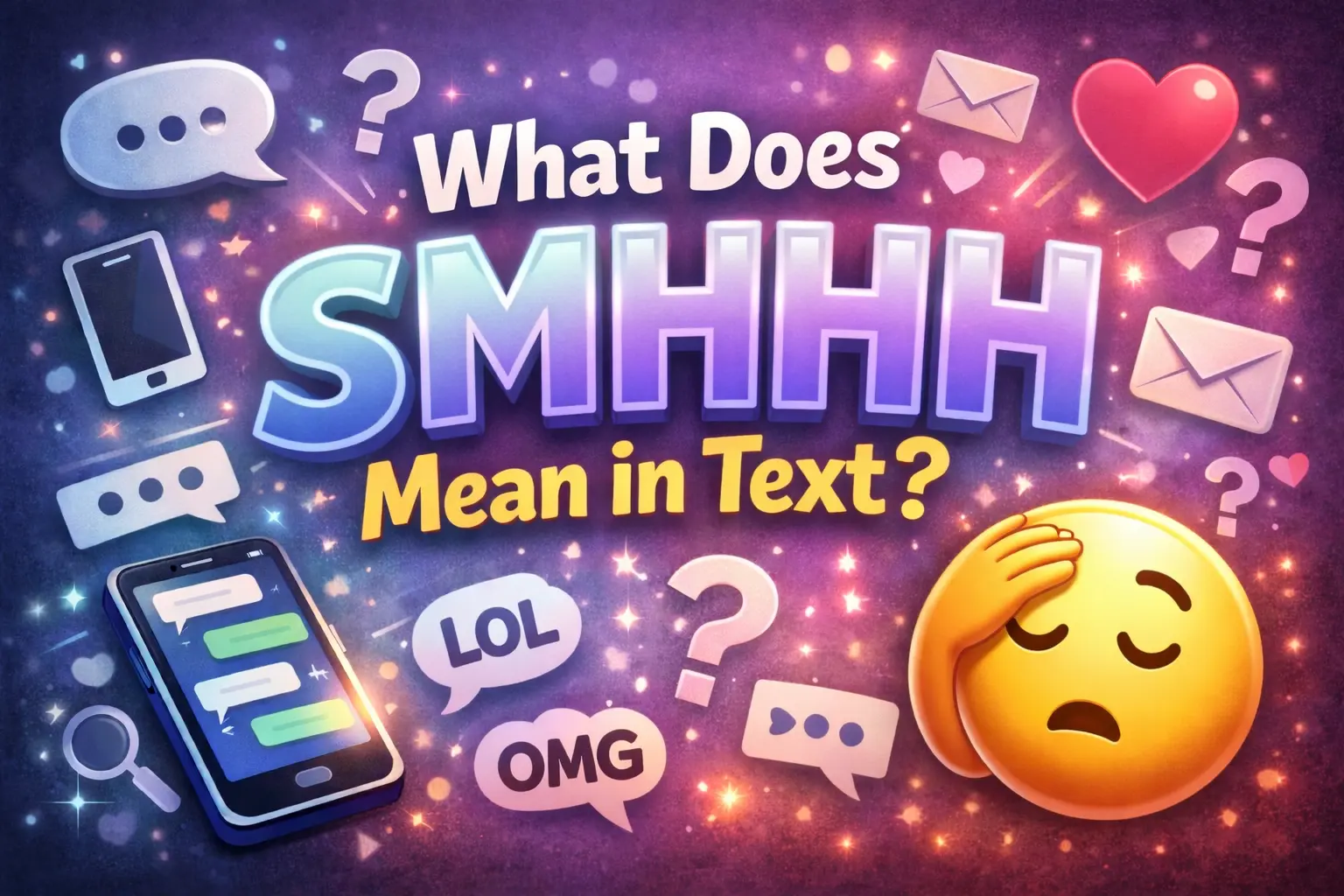
If you’ve ever received a message like “smhhh” and paused for a second, you’re not alone. It looks simple, but the tone behind it can feel confusing. Is the person annoyed, joking, or just reacting casually?
People search for “what does smhhh mean in text” because it carries emotion without explanation. It shows up in chats, comments, and DMs, yet its meaning shifts depending on context. That’s where the confusion begins.
This guide breaks it down clearly. You’ll understand what “smhhh” really means, how people use it, and how to respond without second-guessing yourself.
SMHHH – Quick Meaning
SMHHH stands for “shaking my head hard” or “shaking my head repeatedly.”
It’s an intensified version of “smh” and expresses stronger emotion.
What it usually conveys:
- Disbelief
- Frustration
- Mild disappointment
- Amusement mixed with judgment
Simple examples:
- “You forgot again? smhhh”
- “He really said that? smhhh”
- “You stayed up all night gaming smhhh 😂”
The extra “hh” adds emphasis. It turns a basic reaction into something more emotional.
Origin & Background
“SMH” started as shorthand for “shaking my head” in early internet chat rooms and forums. It became popular on platforms like Twitter and Reddit, where quick emotional reactions matter.
As digital language evolved, people began stretching words to express tone. Just like “lol” became “loool,” “smh” turned into “smhhh.”
This shift reflects how online communication mimics real-life expression. When someone shakes their head repeatedly in real life, it shows stronger emotion. “SMHHH” captures that same feeling in text.
Social media played a huge role in this evolution. Platforms like TikTok and Instagram encourage expressive, exaggerated reactions. Over time, “smhhh” became a subtle way to show judgment, humor, or disbelief without writing a full sentence.
Real-Life Conversations
Here’s how “smhhh” shows up in everyday digital conversations.
WhatsApp Chat
Person A: I missed my exam because I overslept
Person B: smhhh you had one job 😭
Instagram DMs
Person A: I texted my ex again
Person B: smhhh why do you do this to yourself
TikTok Comments
Comment 1: He really thought that was a good idea
Comment 2: smhhh people never learn
Text Message
Person A: I spent all my money on shoes again
Person B: smhhh not this again
These examples show how “smhhh” carries tone. It’s rarely neutral. There’s always emotion behind it.
Emotional & Psychological Meaning
At its core, “smhhh” is emotional shorthand. It replaces a full reaction with a quick signal.
What it expresses emotionally:
- Mild frustration without confrontation
- Disbelief without explanation
- Judgment softened with humor
- Concern masked as casual reaction
People use it because it feels safer than direct criticism. Instead of saying, “That was a bad decision,” they say “smhhh.” It creates distance while still expressing opinion.
There’s also a psychological layer. In fast-paced digital conversations, people want to react instantly. “SMHHH” allows them to show emotion without investing time in explanation.
A relatable scenario:
You tell a friend you stayed up all night scrolling instead of finishing your work. They reply “smhhh.”
They’re not attacking you. They’re signaling concern, disappointment, and maybe a little amusement all at once.
That’s the power of this simple expression.
Usage in Different Contexts
Social Media
On platforms like TikTok, Twitter, and Instagram, “smhhh” is common.
It’s often used in comments to react to:
- Viral videos
- Controversial opinions
- Funny mistakes
Tone can be playful or critical depending on context.
Friends & Relationships
Among friends, “smhhh” feels light and informal.
It’s often used to:
- Tease someone
- Show disappointment without being harsh
- React to predictable behavior
In close relationships, it can even feel affectionate.
Work / Professional Settings
Using “smhhh” in professional communication is risky.
It can come across as:
- Dismissive
- Unprofessional
- Passive-aggressive
In most cases, it’s better to avoid it in emails or formal chats.
Casual vs Serious Tone
- Casual: playful teasing, inside jokes
- Serious: subtle criticism or frustration
The same word can feel very different depending on the situation.
When NOT to Use It
There are moments where “smhhh” can backfire.
Avoid using it when:
- Someone is sharing something serious or emotional
- You’re speaking to someone older or unfamiliar with slang
- You’re in a professional setting
- Cultural tone might be misunderstood
It can seem dismissive if used at the wrong time.
Common Misunderstandings
1. It’s always negative
Not always. Sometimes it’s playful or teasing.
2. It means anger
It usually signals mild frustration, not full anger.
3. It’s rude by default
Tone depends on relationship and context.
4. It has a fixed meaning
In reality, it shifts based on how it’s used.
Understanding tone is key. Without context, it’s easy to misinterpret.
Comparison Table
| Expression | Meaning | Tone | Usage |
|---|---|---|---|
| SMH | Shaking my head | Mild reaction | Casual chats |
| SMHHH | Stronger reaction | Frustrated or amused | Informal, expressive |
| LOL | Laughing out loud | Positive | Humor |
| OMG | Oh my God | Surprise | Emotional reaction |
| Facepalm | Embarrassment or disbelief | Visual reaction | Online posts |
| Wow | Neutral surprise | Depends on context | Universal |
Key Insight:
“SMHHH” stands out because it blends judgment with emotion. It says a lot without saying much.
Variations / Types
Here are common variations and how they differ:
- SMH – Basic reaction, mild disbelief
- SMHH – Slightly stronger than SMH
- SMHHH – Emphasized frustration or disbelief
- SMFH – Stronger, includes frustration or anger
- SMGDH – “Shaking my goddamn head,” more intense
- SMDH – Short version of stronger frustration
- SMH LOL – Mixed reaction, disbelief plus humor
- SMH WOW – Surprise and disappointment combined
- SMH FR – “For real,” emphasizing seriousness
- SMH BRO – Casual, often used among friends
Each variation adds emotional depth depending on context.
How to Respond When Someone Uses It
Your reply depends on the tone behind it.
Casual Replies
- “I know, I messed up 😂”
- “Don’t judge me”
Funny Replies
- “Let me live 😭”
- “Mind your business smh”
Mature Replies
- “Yeah, I realize that wasn’t the best decision”
- “I’ll fix it next time”
Respectful Replies
- “I understand your reaction”
- “Thanks for pointing that out”
Reading the tone is more important than the word itself.
Regional & Cultural Usage
Western Culture
In the US and UK, “smhhh” is widely used in casual conversations. It’s often playful, sarcastic, or lightly critical.
Asian Culture
Usage varies. In some regions, people prefer emojis over text slang. “SMHHH” may feel unfamiliar or overly direct.
Middle Eastern Culture
Tone sensitivity matters more. It can be misunderstood as disrespectful if used with elders or in formal contexts.
Global Internet Usage
Online communities normalize it. Gamers, influencers, and meme culture use it frequently.
Generational Differences
- Gen Z: Uses it naturally, often with humor
- Millennials: Understand it but use it less
- Older generations: May find it confusing or unclear
Understanding your audience makes all the difference.
Is It Safe for Kids?
“SMHHH” is generally safe. It doesn’t contain offensive language.
However, context matters. Kids may use it in ways that come across as dismissive or disrespectful, especially toward adults.
Guidance and awareness help ensure it’s used appropriately.
FAQs
1. What does SMHHH mean in text?
It means “shaking my head hard” and expresses stronger disbelief or frustration.
2. Is SMHHH rude?
Not always. It depends on tone and relationship.
3. What’s the difference between SMH and SMHHH?
SMHHH adds emphasis and stronger emotion.
4. Can I use SMHHH in professional messages?
It’s best to avoid it in formal communication.
5. Does SMHHH mean anger?
Usually mild frustration, not full anger.
6. Is SMHHH used globally?
Yes, but understanding varies by culture and age group.
7. How should I respond to SMHHH?
Match the tone. Keep it light, honest, or respectful depending on context.
Conclusion
“SMHHH” might look like just another piece of internet slang, but it carries real emotional weight. It reflects how modern communication has become faster, more expressive, and sometimes more subtle.
Understanding it is less about memorizing a definition and more about reading the situation. Tone, relationship, and context shape its meaning every time it’s used.
Once you get the feel for it, you’ll start recognizing the emotion behind it instantly. And you’ll know exactly how to respond without overthinking.
Use it wisely, keep it natural, and let it reflect your voice rather than replace it.