
If you spend any time texting, scrolling through social media, or reading online comments, you have probably seen someone type “FML” after a frustrating moment. Maybe a friend posted, “Missed my flight… FML,” or someone on TikTok commented, “Dropped my phone in water. FML.”
At first glance, the phrase can seem confusing, harsh, or even offensive. Some people assume it is just internet humor, while others wonder if it signals genuine emotional stress. That confusion is exactly why so many people search for the meaning behind it.
Understanding modern slang is more than learning abbreviations. It is about understanding emotion, digital culture, and the way people communicate online today. In many cases, slang like FML acts as emotional shorthand. It allows people to express disappointment, embarrassment, exhaustion, or hopelessness in just three letters.
This guide breaks down exactly what FML means in text, where it came from, how people use it, and when you should avoid using it.
FML – Quick Meaning
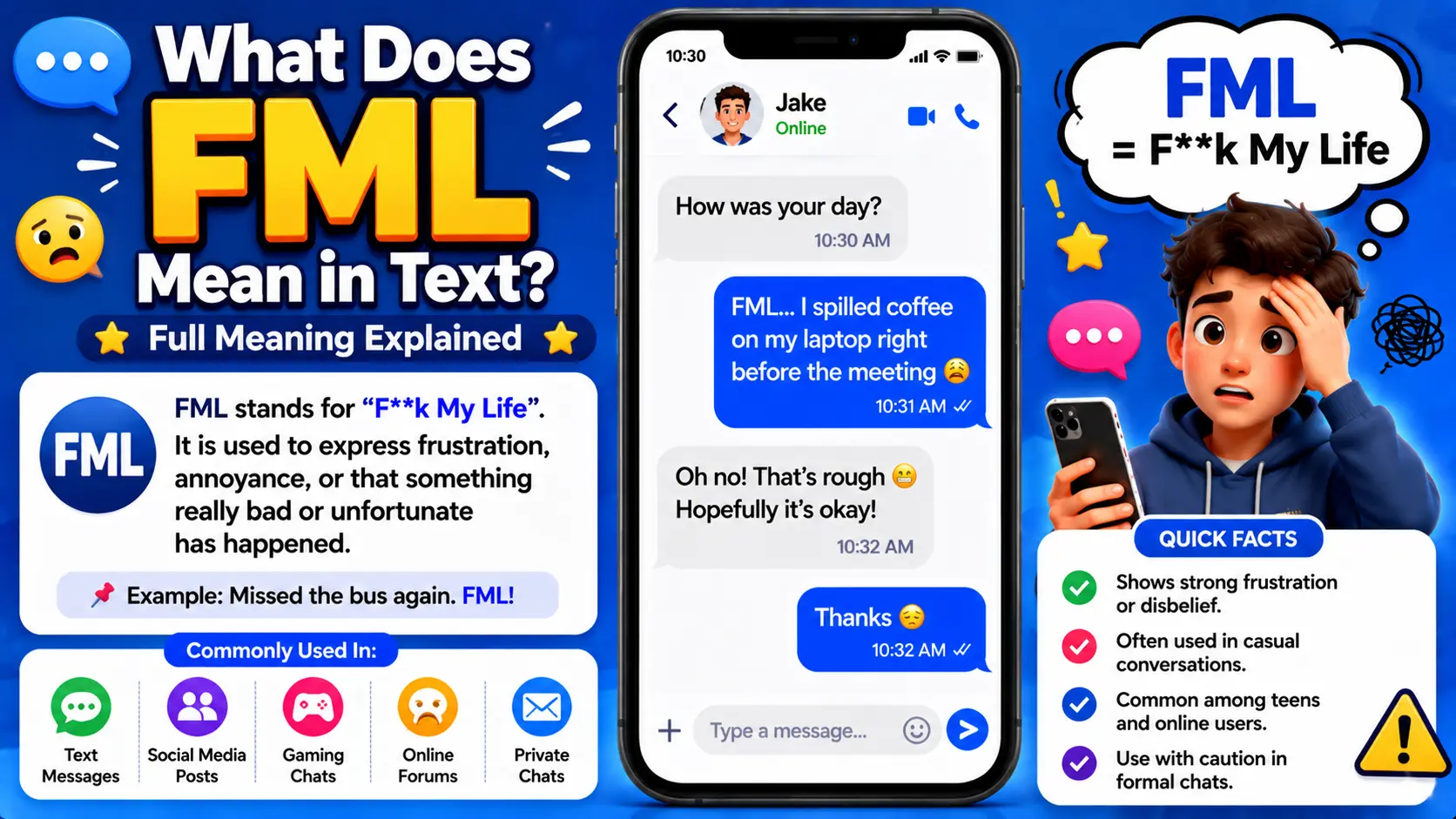
FML stands for:
“F My Life”
It is commonly used when someone feels frustrated, unlucky, embarrassed, stressed, or emotionally overwhelmed.
Most of the time, people use it casually rather than literally. It usually reflects temporary annoyance instead of serious despair.
Simple Meaning
- Expression of frustration
- Reaction to bad luck
- Dramatic response to inconvenience
- Emotional exaggeration for humor
Common Examples
“My alarm didn’t go off and now I’m late. FML.”
“I studied the wrong chapter for the exam. FML.”
“Dropped pizza face down on the floor. FML.”
In texting culture, tone matters a lot. FML is often humorous, sarcastic, or self-deprecating.
Origin & Background
FML became widely popular during the late 2000s internet era. The phrase existed in spoken language before that, but social media made it explode globally.
One major reason for its popularity was the rise of short-form emotional posting. People wanted quick ways to share embarrassing or frustrating moments online. FML became perfect for that purpose because it was short, dramatic, and emotionally expressive.
The phrase gained even more attention through websites where users shared personal disasters and awkward experiences. Over time, it moved from forums into texting culture, memes, Twitter posts, TikTok captions, and everyday conversations.
Cultural Influence
Internet culture rewards relatability. When someone posts a small disaster followed by “FML,” others instantly understand the emotional tone.
Examples include:
- Missing an important event
- Sending a text to the wrong person
- Spilling coffee on work clothes
- Forgetting homework or passwords
The phrase evolved from intense frustration into a lighter, meme-driven expression. Today, many people use it jokingly even for minor inconveniences.
Real-Life Conversations
WhatsApp Conversation
Person A:
I just realized today is the deadline for the assignment.
Person B:
Wait… you didn’t submit it?
Person A:
Nope. FML.
Instagram DM
Person A:
Did your crush reply?
Person B:
Yeah… with “who’s this?”
Person A:
Ouch.
Person B:
FML honestly.
TikTok Comments
Person A:
Imagine falling in front of your entire class.
Person B:
Did that yesterday. FML.
Text Message
Person A:
My mom found my hidden snacks.
Person B:
That’s tragic.
Person A:
And she ate them too. FML.
Emotional & Psychological Meaning
FML is more emotional than many people realize.
On the surface, it looks like casual slang. But psychologically, it often reflects a need for emotional release. Instead of explaining frustration in detail, people compress their feelings into one dramatic phrase.
What Emotion Does It Express?
Usually:
- Frustration
- Embarrassment
- Stress
- Disappointment
- Emotional exhaustion
- Self-pity mixed with humor
Interestingly, humor plays a major role. Many people use FML to soften emotional discomfort. Turning frustration into a joke makes it easier to share publicly.
Why People Use It
Modern communication moves fast. People want emotional efficiency. FML instantly communicates:
- “Something went wrong.”
- “I feel unlucky.”
- “Please relate to my pain.”
It creates emotional connection through shared struggle.
Personal-Style Scenario
Imagine waking up late after barely sleeping, spilling coffee on your shirt, then discovering your presentation file disappeared. Instead of explaining the whole emotional meltdown, many people simply text:
“Today is cursed. FML.”
That one phrase carries exhaustion, stress, humor, and vulnerability all at once.
Usage in Different Contexts
Social Media
FML is extremely common on:
- TikTok
- Snapchat
- X
People often pair it with memes, bad luck stories, or embarrassing moments.
Example:
“Accidentally liked a photo from 2018. FML.”
Friends & Relationships
Among friends, FML usually feels casual and relatable.
Example:
“My boyfriend saw my old cringe videos. FML.”
In relationships, it can also express playful drama rather than genuine anger.
Work or Professional Settings
Using FML professionally is risky.
While some coworkers joke casually in private chats, the phrase contains profanity indirectly. In formal communication, it can appear immature or inappropriate.
Avoid using it in:
- Emails
- Job interviews
- Client messages
- Academic settings
Casual vs Serious Tone
Tone completely changes interpretation.
Casual Use
“Forgot my charger. FML.”
This feels lighthearted.
Serious Use
“Everything is falling apart. FML.”
This may signal deeper emotional distress.
Context matters greatly.
When NOT to Use It
Even though FML is common online, there are situations where it can create problems.
Professional Environments
Managers, teachers, or clients may see it as disrespectful or unprofessional.
Sensitive Situations
Avoid using it around:
- Serious illness
- Grief
- Trauma
- Major personal loss
Using internet slang in deeply emotional situations can appear insensitive.
Cultural Differences
Some cultures view profanity more seriously than others. Since FML contains implied offensive language, older generations or conservative audiences may react negatively.
Misunderstanding Risks
Some people interpret it literally and may become concerned about mental health or emotional stability.
Common Misunderstandings
People Think It Always Means Depression
Not necessarily.
Most users say FML casually after minor frustrations. It is often exaggerated humor rather than a serious emotional statement.
Some Assume It Is Aggressive
Actually, FML is usually directed inward rather than at another person.
It expresses:
- “My situation is terrible”
instead of - “I hate you”
Literal vs Figurative Meaning
Literal interpretation:
Life is unbearable.
Figurative internet interpretation:
“Today is annoying.”
That distinction is important.
Comparison Table
| Expression | Meaning | Emotional Tone | Common Usage |
|---|---|---|---|
| FML | Frustration or bad luck | Dramatic, sarcastic | Everyday problems |
| SMH | Disappointment or disbelief | Mild annoyance | Reactions online |
| WTF | Shock or confusion | Aggressive or surprised | Unexpected situations |
| LOL | Laughing | Positive or humorous | Casual chats |
| RIP | Symbolic loss or failure | Funny or serious | Memes and jokes |
| Blessed | Gratitude or positivity | Optimistic | Social media captions |
| I’m done | Emotional exhaustion | Frustrated | Arguments or stress |
Key Insight
FML stands out because it combines frustration with humor. Unlike purely angry slang, it often invites sympathy and shared laughter rather than conflict.
Variations & Types
1. “Major FML”
Used for extreme frustration.
2. “Today = FML”
Suggests the entire day feels terrible.
3. “FML moment”
Refers to a specific embarrassing event.
4. “FML lol”
Softens negativity with humor.
5. “Instant FML”
Sudden unexpected disaster.
6. “Weekend FML”
Used when plans fail.
7. “Relationship FML”
Romantic disappointment or awkwardness.
8. “School FML”
Academic stress or embarrassment.
9. “Work FML”
Job-related frustration.
10. “Travel FML”
Flight delays, lost luggage, or vacation disasters.
How to Respond When Someone Uses It
Casual Replies
- “That’s rough.”
- “Oof, I’d be annoyed too.”
- “Bad luck today.”
Funny Replies
- “Your villain origin story begins.”
- “The universe really said no.”
- “Plot twist energy.”
Mature Replies
- “I hope things improve soon.”
- “That sounds genuinely stressful.”
- “Take a break if you need one.”
Respectful Replies
- “I’m here if you want to talk.”
- “Sorry you’re dealing with that.”
- “Hope tomorrow goes better.”
The best response depends on emotional intensity.
Regional & Cultural Usage
Western Culture
In the United States, Canada, and much of Europe, FML is widely understood as casual internet slang. Younger users often treat it humorously.
Asian Culture
In many Asian countries, English internet slang spreads heavily through pop culture and social media. However, some users may avoid phrases with profanity because of cultural politeness norms.
Middle Eastern Culture
Usage exists online, especially among younger bilingual users, but public profanity may be less socially accepted depending on cultural and religious expectations.
Global Internet Usage
FML has become globally recognizable because memes and social media platforms cross language barriers quickly.
Even non-native English speakers often understand its emotional meaning immediately.
Gen Z vs Millennials
Gen Z
- Uses FML more ironically
- Often meme-based
- Emotion mixed with humor
Millennials
- More emotionally direct
- Common in texting culture from the 2000s
- Often tied to relatable life stress
Younger users today sometimes replace FML with newer slang expressions, but it remains widely understood.
Is It Safe for Kids?
FML includes implied profanity, so parents and educators may consider it inappropriate for younger children.
However, context matters.
Many teenagers use it casually without intending serious negativity. Still, adults should pay attention if the phrase appears frequently alongside signs of emotional distress.
Teaching kids emotional communication is more helpful than reacting only to the slang itself.
FAQs
What does FML mean in texting?
FML means “F*** My Life.” It expresses frustration, embarrassment, or bad luck.
Is FML offensive?
It can be mildly offensive because it contains implied profanity, but many people use it casually online.
Do people use FML seriously?
Sometimes. Most usage is humorous, but context can reveal genuine emotional stress.
Can I use FML at work?
It is better to avoid it in professional settings because it may seem immature or inappropriate.
Is FML still popular?
Yes. While newer slang appears constantly, FML remains widely recognized across social media and texting platforms.
What is the difference between FML and SMH?
FML expresses personal frustration, while SMH usually reacts to disappointment or disbelief about someone else’s actions.
Why do people use dramatic slang online?
Dramatic slang helps people express emotions quickly, connect socially, and turn frustration into humor.
Conclusion
Understanding what FML means in text goes beyond decoding internet slang. It reveals how modern communication blends humor, stress, exaggeration, and emotional connection into a few simple letters.
For many people, FML is not a literal cry for help. It is a relatable way to cope with awkward moments, bad luck, and everyday frustration. Whether someone misses a deadline, embarrasses themselves online, or spills coffee before work, the phrase captures emotions instantly.
Still, context matters. The same expression can feel playful in one conversation and deeply emotional in another. Knowing when and where to use it helps you communicate more thoughtfully and confidently.
Language online changes fast, but emotional expression remains universal. That is why slang like FML continues to survive across generations, platforms, and cultures.