
Texting language can sometimes feel like a secret code. One abbreviation you may have stumbled upon recently is IFY. If you’ve seen it in WhatsApp chats, Instagram DMs, or TikTok comments and wondered what it meant, you’re not alone. This guide will explain what IFY means in text, where it comes from, and how to use it naturally in everyday conversations.
Communication has evolved rapidly with the rise of digital messaging. People crave shortcuts, yet these shortcuts often leave others puzzled. Understanding IFY isn’t just about decoding letters—it’s about connecting authentically in a world that moves at a digital pace.
IFY – Quick Meaning
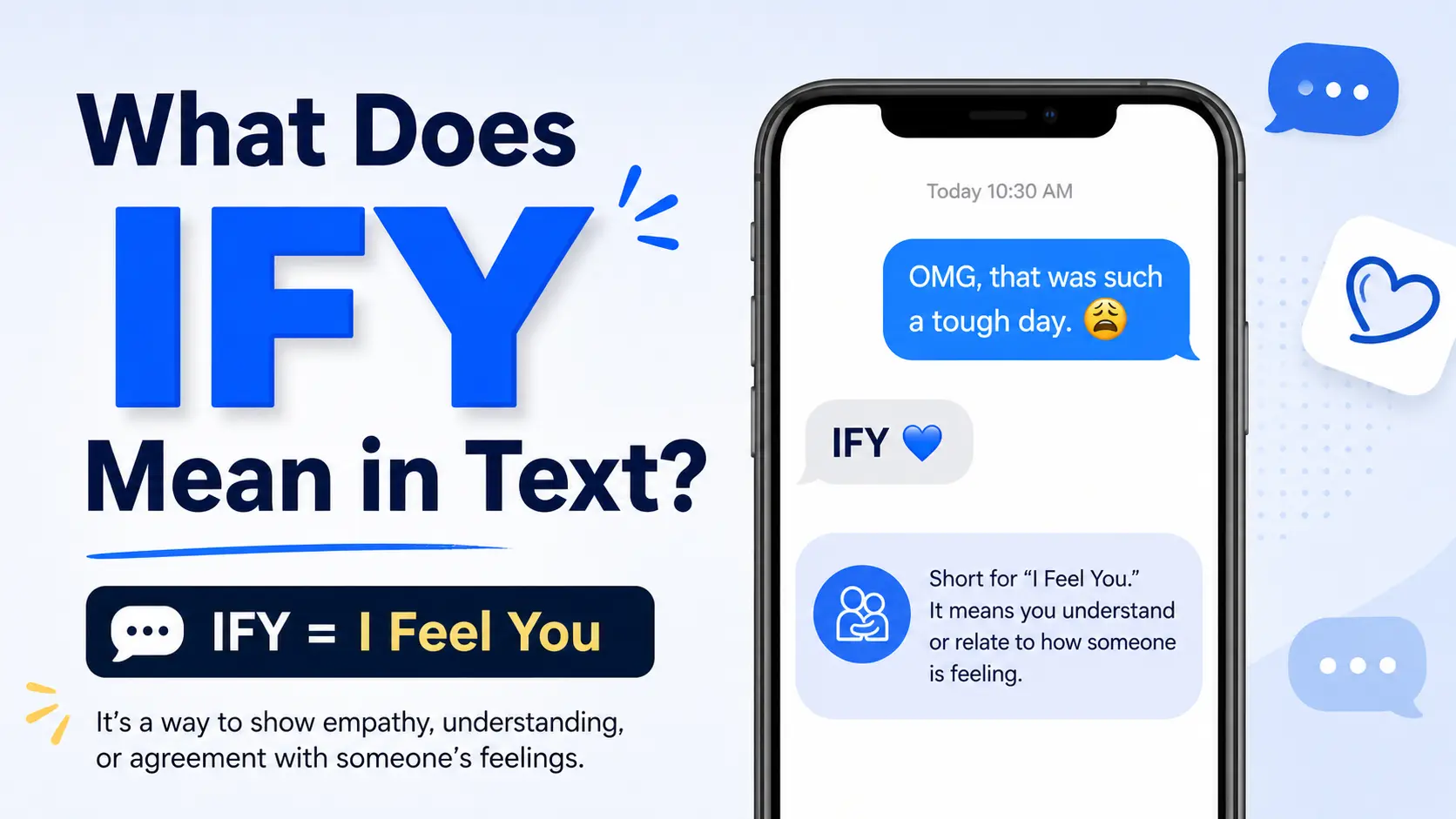
At its core, IFY is an abbreviation commonly used in texting to mean:
- “I feel you” – an expression of understanding or empathy.
It’s short, casual, and emotionally expressive. Think of it as nodding in agreement, but in words.
Examples in text:
- “I’ve been stuck in traffic for hours 😩”
- “IFY, that’s the worst!”
- “I’m so tired of online meetings”
- “IFY, same here 😅”
- “Just got rejected from the job I really wanted”
- “IFY, it’s tough. Don’t let it get you down.”
This abbreviation is versatile, showing solidarity, empathy, or agreement in a concise form.
Origin & Background
The phrase “I feel you” has roots in African American Vernacular English (AAVE) and street culture, where expressions of empathy and understanding often appear in casual conversation. Over time, this phrase migrated into mainstream culture, especially online.
With social media platforms like TikTok, Instagram, and Twitter encouraging brevity, IFY emerged as a convenient shorthand. Instead of typing out “I feel you,” young users condensed it to three letters—keeping conversations quick and responsive.
Over the years, IFY has evolved beyond casual texting. It’s now part of digital culture, appearing in comment threads, memes, and even in informal professional chats.
Real-Life Conversations
Seeing IFY in action helps understand its natural tone. Here are some realistic examples:
WhatsApp Chat
Person A: “I’ve been pulling all-nighters for this project”
Person B: “IFY, I’ve been there. Hang in there!”
Instagram DM
Person A: “This breakup is really messing with me”
Person B: “IFY 💔 Sending hugs”
TikTok Comments
Person A: “No one told me adulthood would be this stressful”
Person B: “IFY, it’s a rollercoaster 😅”
Text Message
Person A: “My dog chewed my favorite shoes 😭”
Person B: “IFY! Pets can be little chaos machines”
These examples show IFY’s versatility—from sympathy to lighthearted agreement.
Emotional & Psychological Meaning
IFY is more than just letters—it carries emotional weight.
- Emotion expressed: Empathy, understanding, or shared experience.
- Why people use it: To quickly validate feelings without writing long messages.
- Psychological insight: Using IFY signals attentiveness and emotional resonance. It’s a digital way of saying, “I see you, and I understand.”
Scenario: Imagine your friend texts, “I’m anxious about the presentation tomorrow.” Typing “IFY” instantly conveys that you relate, without making them feel judged or overwhelmed.
Usage in Different Contexts
Social Media: Used widely in comments and replies to show solidarity.
Friends & Relationships: Signals emotional support, agreement, or shared frustration.
Work / Professional Settings: Can appear in casual Slack or Teams messages, but only with colleagues you know well.
Casual vs Serious Tone: Works best in casual conversations. Overuse in formal situations may seem unprofessional.
When NOT to Use It
- Avoid in formal emails or professional presentations.
- Be cautious in cross-cultural communication where abbreviations may confuse.
- Not ideal for serious or sensitive topics if misread as flippant.
Common Misunderstandings
- Literal interpretation: Some may read it as “If You” instead of “I feel you.”
- Tone confusion: Can be mistaken for sarcasm if context is missing.
- Misuse: Overusing IFY can reduce emotional impact.
Comparison Table
| Expression | Meaning | Tone | Usage |
|---|---|---|---|
| IFY | I feel you | Empathetic, casual | Texts, DMs, comments |
| I understand | Literal understanding | Neutral, formal | Professional or serious contexts |
| Same | Agreement | Casual, friendly | Quick response among friends |
| Me too | Shared experience | Casual, empathetic | Peer conversations |
| I hear you | Acknowledgment | Calm, neutral | Mixed contexts |
Key Insight: IFY is unique because it blends empathy with casual brevity, making it a highly relatable digital expression.
Variations / Types
- IFY – I feel you, general empathy
- iFY – Stylized lowercase for informal chats
- I feel u – Texting shorthand, even more casual
- FYI – Totally different meaning: “For your information”
- IFU – Rarely used, “I feel you too”
- i-fy – Playful emphasis in social posts
- IFU 😢 – Adds emotional nuance
- IFY fam – Used with close friends
- IFY bro/sis – Indicates solidarity in peer groups
- IFY tho – Adds casual nuance or emphasis
How to Respond When Someone Uses IFY
- Casual reply: “Right? Glad you get it!”
- Funny reply: “Finally, someone speaks my language 😎”
- Mature reply: “Thanks, that means a lot.”
- Respectful reply: “I appreciate you understanding.”
Regional & Cultural Usage
- Western culture: Widely understood online, casual and friendly.
- Asian culture: Increasingly used among Gen Z in messaging apps, may be less known among older generations.
- Middle Eastern culture: Mostly digital youth culture, often in English-language chats.
- Global internet usage: Recognized on TikTok, Instagram, and Twitter.
- Generational differences: Gen Z uses it freely; Millennials may recognize but prefer full phrases like “I feel you.”
Is It Safe for Kids?
Yes, IFY is generally safe. It conveys empathy and agreement without explicit content. Parents should still teach context awareness, as tone can be misread.
FAQs
1. Can IFY be used in professional emails?
No, it’s best for casual chats or team messaging among peers.
2. Does IFY always mean empathy?
Mostly, yes, though context matters; it can also show agreement.
3. Is IFY the same as FYI?
No, FYI means “for your information” and is completely different.
4. Can older people understand IFY?
Some do, but it’s mostly popular among younger generations.
5. Is IFY universal across cultures?
Increasingly, but awareness varies regionally.
6. Can IFY be used sarcastically?
Yes, tone and context determine sarcasm.
7. How do I know if IFY is appropriate?
If the conversation is casual and empathetic, it’s suitable.
Conclusion
Understanding IFY allows you to navigate modern texting culture confidently. It’s more than an abbreviation—it’s a quick, emotional connection in a world where digital messaging often feels cold. By using it appropriately, you communicate empathy, solidarity, and shared experience without writing lengthy messages. Next time you want to show someone you understand, a simple IFY can speak volumes.