
Have you ever been scrolling through Instagram, TikTok, or texting a friend, and suddenly saw someone type “finna” and paused, wondering what it actually meant? You are not alone. Modern slang moves fast, and words like “finna” can leave anyone scratching their head.
This little word packs more than just a casual meaning. It’s a blend of culture, emotion, and generational nuance. Understanding “finna” not only helps you decode texts and comments but also gives insight into how people communicate casually today. By the end of this article, you’ll feel confident reading, using, and even replying to “finna” in different contexts.
Finna – Quick Meaning
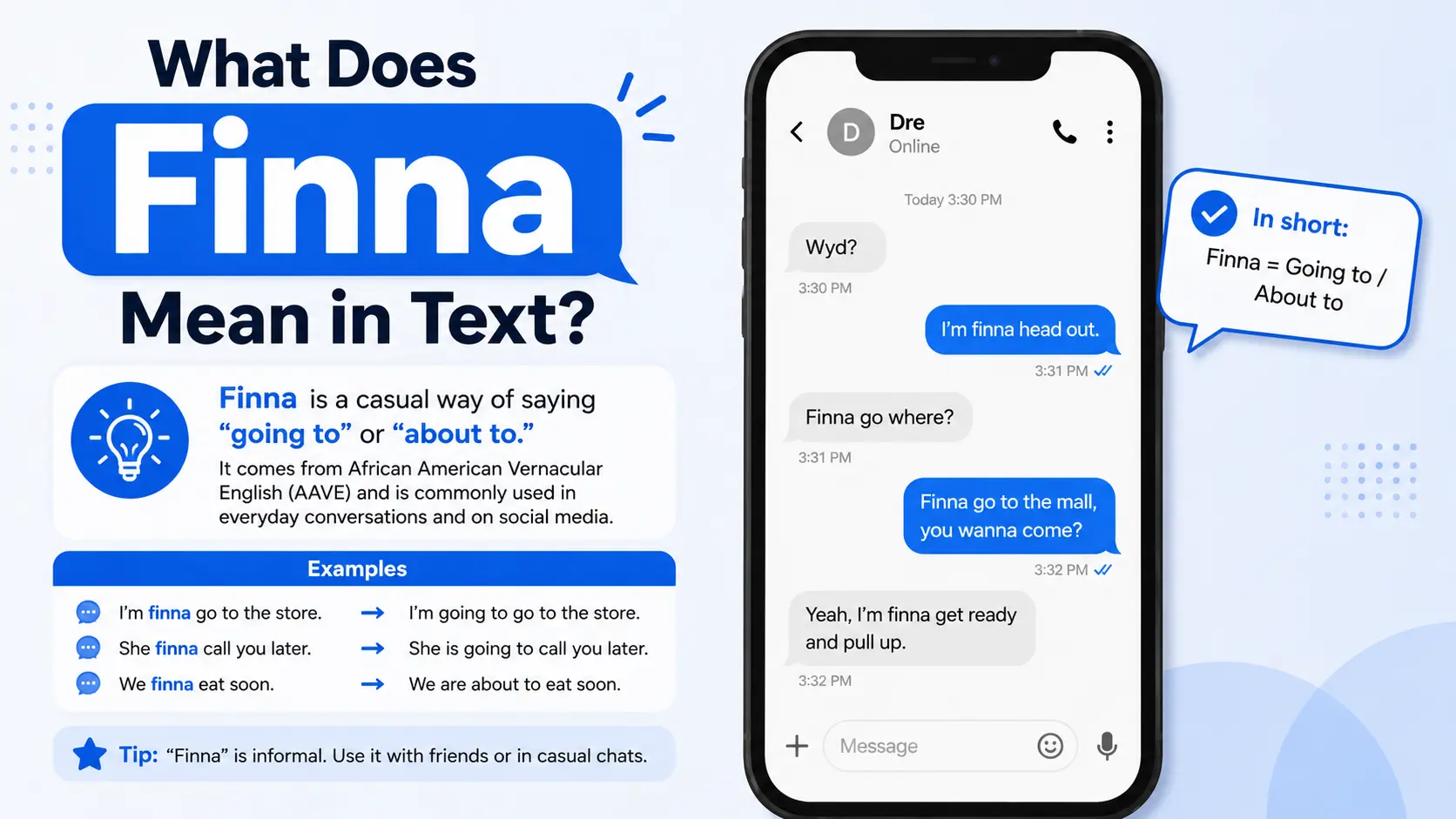
At its core, “finna” is a contraction of “fixing to,” and it indicates an intention to do something. Think of it as a modern, casual way to say “I’m going to” or “I plan to.”
Key points:
- It’s informal and mostly used in spoken English, texting, or social media.
- Often associated with African American Vernacular English (AAVE), but now widely used by Gen Z and Millennials online.
- Expresses intention, decision, or readiness to act.
Examples in text:
- “I’m finna grab some lunch, you coming?”
- “She’s finna be so surprised when she sees this gift.”
- “We finna watch that new movie tonight.”
Origin & Background
“Finna” comes from African American Vernacular English, evolving as a simplified form of “fixing to.” Historically, “fixing to” was used in the Southern United States to indicate an imminent action. Over time, in casual speech, it morphed into “finna,” making it quicker and easier to say.
Social media amplified its reach. Platforms like TikTok, Twitter, and Instagram turned “finna” into a viral word, often appearing in memes, captions, and viral videos. Its meaning hasn’t changed much, but the tone can vary depending on the context—playful, sarcastic, or serious.
Real-Life Conversations
Here are some realistic examples showing how “finna” is used in everyday chats:
WhatsApp Chat:
Person A: “Finna head to the gym, you coming?”
Person B: “Lol maybe, I’m still comfy on the couch.”
Instagram DM:
Person A: “I’m finna drop a new song tomorrow, hype it up!”
Person B: “Omg can’t wait, I’m ready to listen!”
TikTok Comment:
Person A: “Finna try this recipe tonight 👀”
Person B: “Do it! I wanna see how it turns out 😍”
Text Message:
Person A: “We finna pull an all-nighter for this project 😅”
Person B: “Bruh, coffee’s on me then!”
These conversations show how natural and versatile the word is in casual communication.
Emotional & Psychological Meaning
“Finna” isn’t just a word. It carries an emotion of immediacy and intention. When someone says “finna,” it signals commitment—they are ready or determined to act. Psychologically, it conveys confidence and casual engagement, reducing formal barriers in conversation.
Imagine texting a friend late at night: “Finna go for a walk.” It’s light, spontaneous, and inviting. You’re showing readiness without overthinking or overexplaining. This immediacy mirrors how digital culture values quick, authentic interactions.
Usage in Different Contexts
- Social Media: Popular in captions, comments, or memes. Adds casual flair.
- Friends & Relationships: Shows intent or plans in a playful, relatable way.
- Work/Professional Settings: Not recommended unless in informal, creative environments. Using “finna” at work could seem unprofessional.
- Casual vs Serious Tone: Mostly casual. Can be playful, joking, or enthusiastic.
When NOT to Use It
- Formal emails, business reports, or presentations.
- Conversations with people unfamiliar with slang—they may misinterpret.
- Cultural or intergenerational settings where informal slang could be misunderstood.
Being aware of context is key. “Finna” works best when everyone in the conversation shares a casual communication style.
Common Misunderstandings
- People sometimes think “finna” means “finally.” Context is crucial.
- Tone can confuse readers—without emojis or tone markers, the intention may seem abrupt.
- Literal interpretation is wrong; it’s about planned action, not completed action.
Comparison Table
| Expression | Meaning | Tone | Notes |
|---|---|---|---|
| Finna | About to do something | Casual, intentional | Most common online |
| Fixing to | Going to do something | Slightly old-fashioned | Southern US origin |
| Gonna | Going to | Casual | More universal, less cultural nuance |
| Boutta | About to | Casual, immediate | Similar to “finna,” regional |
| Planning to | Formal, intentional | Neutral | Suitable for professional contexts |
Key Insight:
“Finna” bridges casual speech and online culture, offering a way to convey intention quickly while signaling belonging to a digital-savvy, informal community.
Variations / Types
- Finna go – I’m going to do something soon.
- Finna eat – Planning to eat; casual, often humorous.
- Finna sleep – Ready to sleep; shows routine intention.
- Finna win – Expresses confidence about an outcome.
- Finna vibe – Getting into a mood or activity.
- Finna drop – About to release content or media.
- Finna flex – Showing off or boasting.
- Finna chill – Planning to relax; casual.
- Finna travel – Intention to go somewhere soon.
- Finna grind – Preparing to work hard or focus.
How to Respond When Someone Uses It
- Casual reply: “Bet, see you there!”
- Funny reply: “Finna what? Take over the world?”
- Mature reply: “Sounds good, let me know when you’re ready.”
- Respectful reply: “Noted, thanks for letting me know.”
Responses can match tone, familiarity, and context.
Regional & Cultural Usage
- Western culture: Widely used online, especially among Gen Z.
- Asian culture: Adopted in informal English chats but less common in spoken form.
- Middle Eastern culture: Mainly online among youth; context matters.
- Global internet usage: Increasingly understood due to TikTok and memes.
- Generational differences: Gen Z embraces it naturally, Millennials use it sparingly, often for humor.
Is It Safe for Kids?
Yes, generally harmless. “Finna” is a casual slang word without offensive meaning. Parents may want to explain it in the context of online chatting to prevent confusion with other words.
FAQs
1. Can I use “finna” in school assignments?
Only if the assignment encourages informal or creative writing. Otherwise, avoid.
2. Is “finna” considered rude?
No, it’s casual, not offensive. Tone matters.
3. Can adults use it without sounding weird?
Yes, in casual or playful contexts. In formal settings, it’s better to avoid.
4. Does “finna” mean the same everywhere?
Mostly yes, but cultural familiarity affects interpretation.
5. Can “finna” replace “going to” in speech?
Yes, in informal speech, texting, or social media.
6. Is it only used by young people?
Mostly Gen Z and Millennials, but it can be used by anyone familiar with the slang.
7. Can “finna” be used in jokes?
Absolutely. It’s often used humorously online.
Conclusion
“Finna” is more than a word; it’s a small cultural marker of intention, immediacy, and belonging in today’s digital world. Understanding it helps you read modern conversations naturally and even join in with confidence. By embracing “finna” in the right contexts, you’re not just using slang—you’re connecting with the rhythm of contemporary communication.
Next time you see “finna” in a text or comment, you’ll know exactly what it means, and you’ll be ready to respond naturally, playfully, or respectfully.