
If you have ever received a message like “You need some TLC” or “She’s giving him TLC,” you might have paused for a moment wondering what it really means. In text messages and social media chats, abbreviations often carry emotional weight, and TLC is one of those phrases that sounds simple but feels deeply meaningful.
People search “what does tlc mean in text” because it shows up in conversations where emotions, care, or concern are involved. It is not just slang. It is a phrase that reflects how people express affection in a fast digital world where short messages often replace long emotional talks.
Understanding TLC helps you read between the lines of conversations. It also helps you respond in a way that feels natural and emotionally aware.
TLC – Quick Meaning in Text
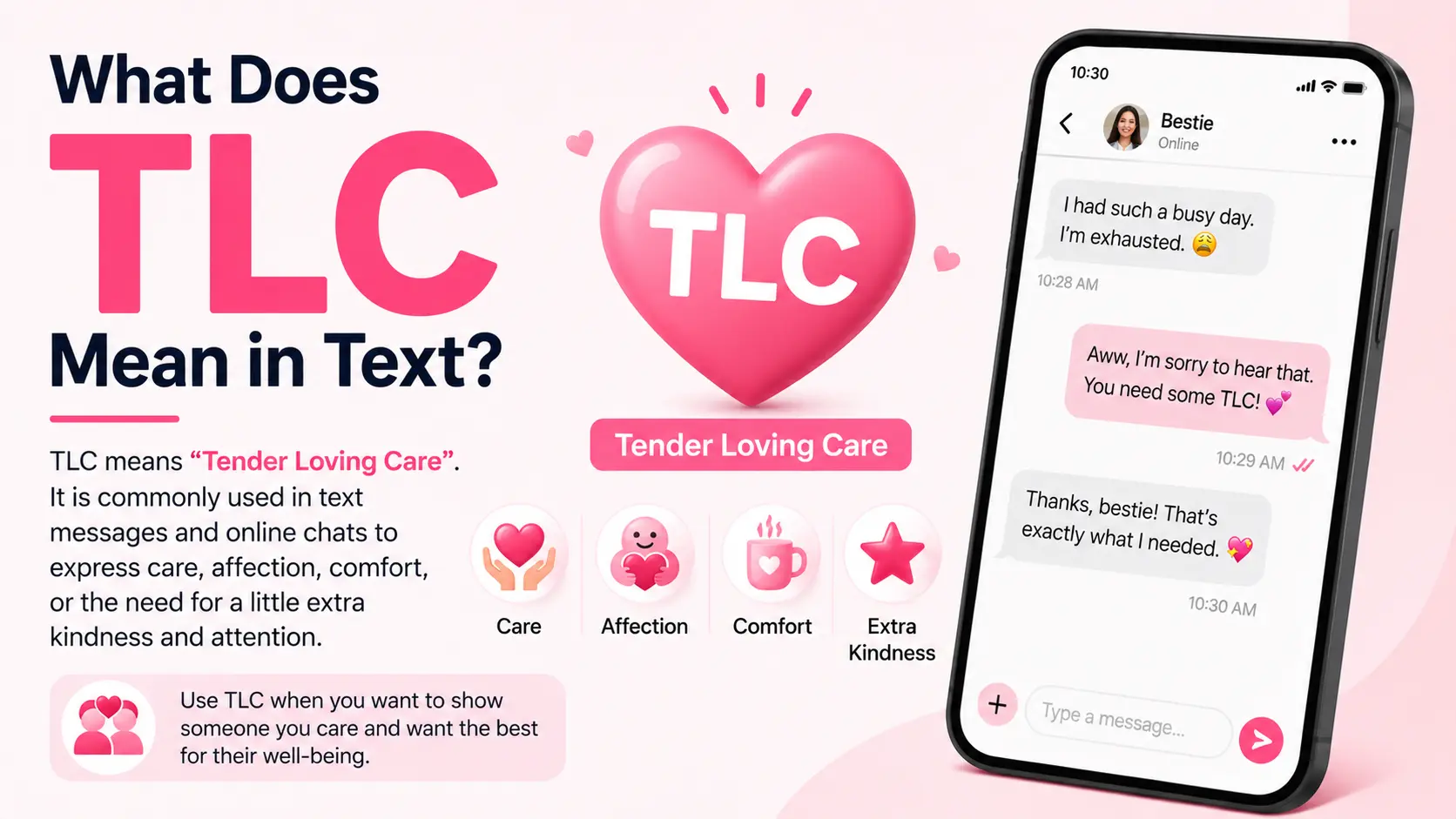
TLC stands for “Tender Loving Care.”
It is used when someone needs kindness, attention, emotional support, or gentle treatment.
Simple meaning:
- Care given with love and warmth
- Emotional support during stress or illness
- Gentle attention to someone or something
Example sentences:
- “She needs some TLC after that tough week.”
- “Give your plants a little TLC.”
- “He’s recovering, so he needs TLC right now.”
In texting, TLC is not romantic by default. It simply means caring for someone or something in a soft, thoughtful way.
Origin & Background of TLC
The phrase “Tender Loving Care” is not new. It has been part of the English language for decades, long before texting and social media existed.
Originally, it was used in caregiving contexts, especially in healthcare, parenting, and emotional support situations. Nurses, caregivers, and family members often used it to describe gentle and compassionate treatment.
Over time, the abbreviation “TLC” became popular in everyday speech and eventually entered digital communication. Social media platforms like Facebook, Instagram, and messaging apps helped shorten it into a quick emotional signal.
Today, TLC is widely used in:
- Friendly chats
- Relationship conversations
- Self-care discussions
- Pet care and lifestyle content
Its meaning has stayed consistent, but its usage has become more casual and widespread in digital culture.
Real-Life Conversations Using TLC
1. WhatsApp Chat (Friends)
Person A: I feel exhausted after exams
Person B: You just need some TLC and a long sleep
Person A: Honestly yes, I’m drained
2. Instagram DM (Relationship)
Person A: You’ve been quiet lately
Person B: Just stressed with work
Person A: Come over, I’ll give you some TLC and good food
3. TikTok Comment Section
User 1: My plants are dying again
User 2: They need TLC, not neglect
User 3: I’m clearly a bad plant parent
4. Text Message (Family)
Mom: Your dad isn’t feeling well
Son: He needs rest and TLC. I’ll come tomorrow
Mom: That would be great
These conversations show how TLC naturally fits into emotional, casual, and caring situations.
Emotional & Psychological Meaning of TLC
TLC is more than just an abbreviation. It reflects emotional awareness and human connection in modern communication.
When someone uses TLC, they are usually expressing:
- Empathy
- Care and concern
- Emotional support
- Gentle reassurance
Psychologically, it signals that the speaker recognizes vulnerability in someone else and responds with warmth instead of judgment.
Real-life scenario:
Imagine a friend going through a breakup. Instead of giving advice or solutions, you simply say, “You need TLC right now.” That phrase alone communicates understanding, comfort, and emotional presence without overwhelming them.
In today’s fast-paced digital communication, TLC works like a soft emotional shortcut. It replaces long explanations with one meaningful phrase.
Usage in Different Contexts
1. Social Media
Used in captions or comments about self-care, pets, plants, or emotional recovery.
- “Weekend plans: sleep and TLC”
- “This house needs some TLC”
2. Friends and Relationships
Used to show care and emotional support.
- “You look tired, you need TLC”
- “I’m here to give you TLC after that bad day”
3. Work / Professional Settings
Rare but used in a softer tone for teamwork or caregiving roles.
- “This project needs some TLC before submission”
4. Casual vs Serious Tone
- Casual: joking about tiredness or self-care
- Serious: emotional recovery, illness, or stress support
When NOT to Use TLC
Even though TLC is friendly, it is not always appropriate.
Avoid using it:
- In formal business communication
- During serious medical emergencies (use clear instructions instead)
- In situations where emotional tone might be misunderstood
- With people who may not understand slang or abbreviations
For example, saying “He needs TLC” in a hospital report would be too informal. In such cases, clear medical language is better.
Common Misunderstandings About TLC
Many people misunderstand TLC because it sounds vague or romantic.
1. Thinking it is romantic only
TLC is not limited to romantic relationships. It applies to friends, family, pets, and even self-care.
2. Confusing it with a brand or channel
Some people confuse TLC with the TV channel name, but in texting, the meaning is completely different.
3. Assuming it means physical care only
TLC includes emotional care, not just physical attention.
4. Overusing it in serious contexts
Using it in formal or high-stakes communication can feel inappropriate.
Comparison Table
| Expression | Meaning | Tone | Usage |
|---|---|---|---|
| TLC | Tender Loving Care | Warm, caring | Emotional support, comfort |
| Care | General attention or concern | Neutral | Everyday use |
| Affection | Love or fondness | Emotional | Relationships |
| Support | Help or assistance | Neutral to formal | Work, emotional help |
| Tough love | Strict care with discipline | Mixed tone | Parenting, mentoring |
Key Insight
TLC stands out because it combines emotional warmth with simplicity. It is softer than “support” and more personal than “care,” making it ideal for emotional conversations.
Variations and Related Expressions
Here are common variations and related slang:
- Self TLC
- Taking care of yourself emotionally or physically
- Extra TLC
- More attention and care than usual
- Give TLC
- To provide care or comfort
- Need TLC
- Requires emotional or physical care
- TLC moment
- A situation needing comfort or rest
- Show TLC
- Express care through actions
- Big TLC
- Strong emotional support
- Little TLC
- Small but meaningful care
- Daily TLC
- Regular self-care routine
- TLC vibes
- A comforting or soothing atmosphere
How to Respond When Someone Uses TLC
Casual replies:
- “I definitely do”
- “I could use some of that”
- “You’re right, I need a break”
Funny replies:
- “Send TLC immediately”
- “Is TLC available in food delivery?”
- “Applying for TLC membership”
Mature replies:
- “Thanks, I really needed that reminder”
- “I appreciate you noticing that”
- “I’ll take some time to rest”
Respectful replies:
- “That means a lot, thank you”
- “I’ll focus on self-care”
- “You’re right, I need to slow down”
Regional & Cultural Usage
Western culture
Widely used in casual speech, social media, and self-care discussions.
Asian culture
Used more in digital spaces among younger generations, especially Gen Z.
Middle Eastern culture
Understood mainly in English-speaking online communities, less common in daily speech.
Global internet usage
TLC is globally recognized in English digital communication.
Generational differences
- Gen Z: Uses it casually in memes, chats, and self-care posts
- Millennials: Use it more in emotional or practical contexts
Is TLC Safe for Kids?
Yes, TLC is completely safe for kids. It is a positive and gentle expression that promotes care, kindness, and emotional awareness. It does not contain harmful or inappropriate meaning.
FAQs About TLC in Text
1. What does TLC mean in texting?
It means “Tender Loving Care,” referring to emotional or gentle care.
2. Is TLC romantic?
Not necessarily. It can be used for friends, family, or even self-care.
3. Can I use TLC in professional messages?
Only in informal or creative professional settings, not formal reports.
4. What is self TLC?
It means taking care of yourself emotionally and physically.
5. Is TLC positive or negative?
It is a positive expression showing care and concern.
6. Why do people say TLC instead of care?
Because it feels warmer, more emotional, and more personal.
7. Is TLC old slang?
It is an older phrase, but still widely used in modern texting.
Conclusion
TLC in text stands for “Tender Loving Care,” and it carries a soft emotional meaning that fits perfectly into today’s digital communication style. It is not just slang. It is a way people express empathy, warmth, and attention in a fast-paced world where emotional expression often gets shortened into simple phrases.
Whether someone says you need TLC or you are giving TLC to someone else, the message is the same: kindness matters. It reminds us that even in short texts, human connection still finds a way to shine through.
Using TLC naturally in conversations helps you communicate care without overexplaining emotions. It is simple, universal, and deeply human.